Skip to content
EduCifuentes
    • PELILLO
    • URUSHI
    • DIAMONDSDIAMANTES
    • SEAWEEDALGAS
    • SALTSAL
  • About/ContactSobre mí/Contacto
/

Urushi

Iwate and Ibaraki, Japan, 2024Iwate e Ibaraki, Japón, 2024

Japan has a centuries-old tradition of producing some of the world’s finest lacquer and crafting exceptional objects from it. Once essential in daily life and highly valued in Europe for its beauty and durability, urushi lacquer fell into decline after World War II, displaced by plastics, Western kitchenware, and cheaper imports from China. Today, less than three percent of the lacquer used in Japan is produced domestically. Only a few skilled sap collectors remain, mostly in Iwate and Daigo Prefectures, continuing a practice passed down through generations.

Urushi lacquerware is durable, repairable, and rooted in a deep respect for natural materials. Recent efforts to preserve the craft include government initiatives to cultivate new lacquer forests and a 2015 policy mandating the use of Japanese lacquer in the restoration of national treasures. Yet despite these measures, the industry faces low profitability and an aging workforce, leaving the future of this cultural tradition uncertain.

Japón tiene una tradición centenaria en la producción de algunas de las mejores lacas del mundo y en la creación de objetos excepcionales con ellas. Antes esencial en la vida cotidiana y muy apreciada en Europa por su belleza y durabilidad, la laca urushi entró en declive después de la Segunda Guerra Mundial, desplazada por los plásticos, la vajilla occidental y las importaciones más baratas desde China. Hoy, menos del tres por ciento de la laca que se usa en Japón se produce en el país. Solo quedan unos pocos recolectores de savia expertos, principalmente en Iwate y Daigo, que mantienen una práctica transmitida de generación en generación.

La laca urushi es duradera, reparable y está arraigada en un profundo respeto por los materiales naturales. Entre los esfuerzos recientes por preservar el oficio hay iniciativas gubernamentales para cultivar nuevos bosques de laca y una política de 2015 que exige usar laca japonesa en la restauración de los tesoros nacionales. Sin embargo, pese a estas medidas, la industria enfrenta una baja rentabilidad y una fuerza laboral envejecida, lo que deja en la incertidumbre el futuro de esta tradición cultural.
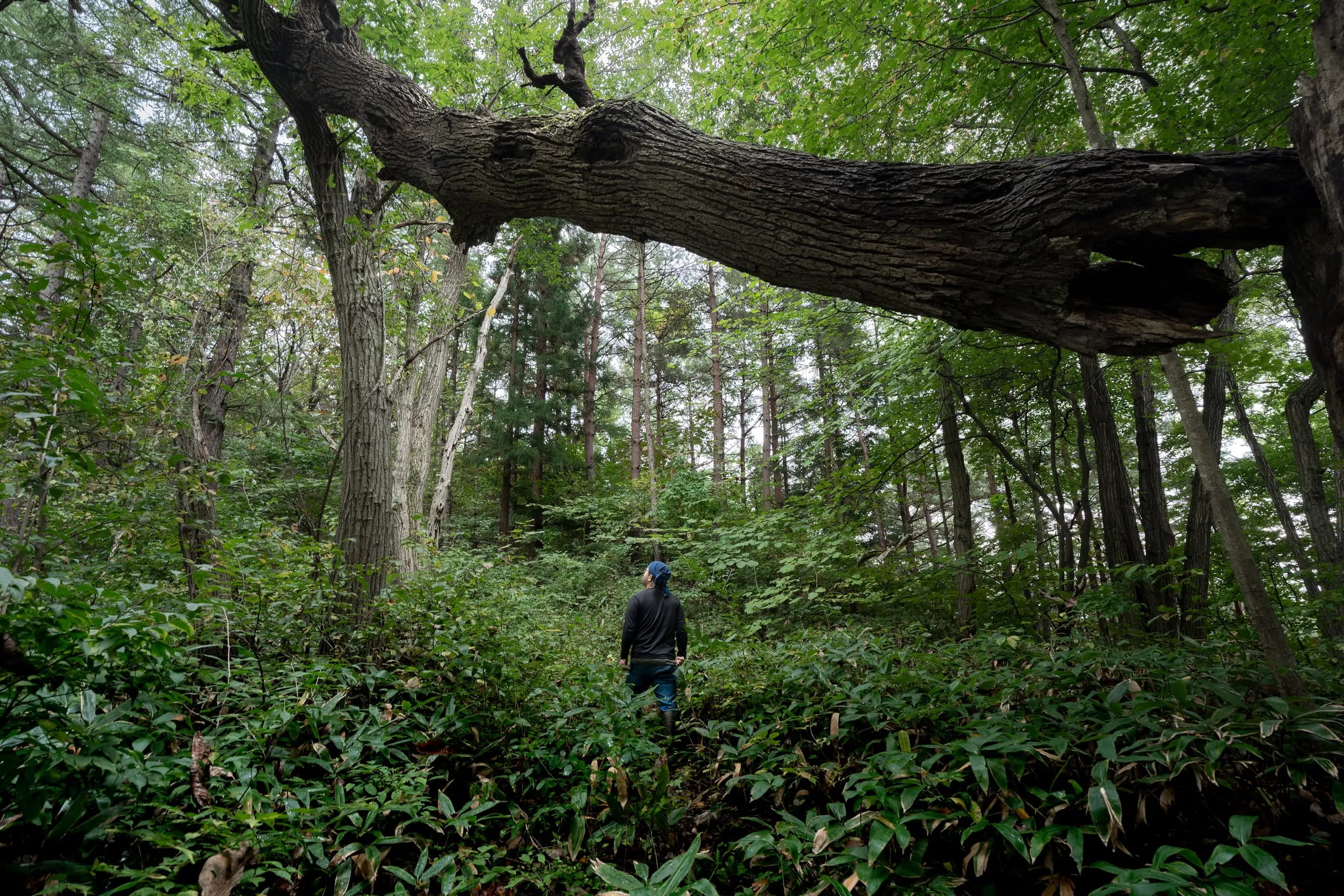
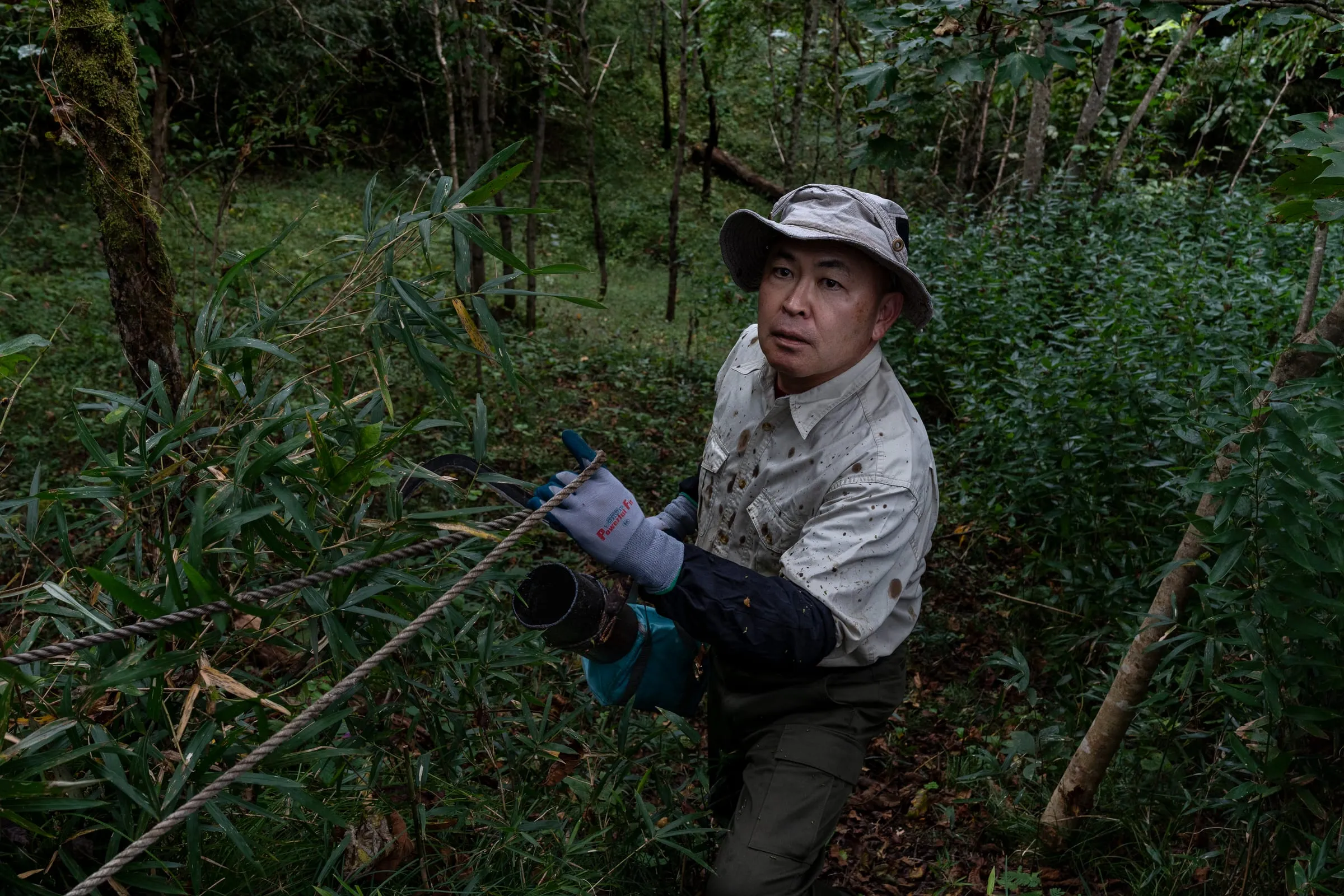
Chiba Hirotaka, 40, collects lacquer sap in the forests of Joboji, Iwate Prefecture, Japan. Urushi, or natural lacquer, has been used in Japan for centuries and is renowned for its quality and durability. Once a thriving local industry, production has declined as most lacquer used in Japan is now imported cheaply from China, with only about three percent coming from domestic harvesters.
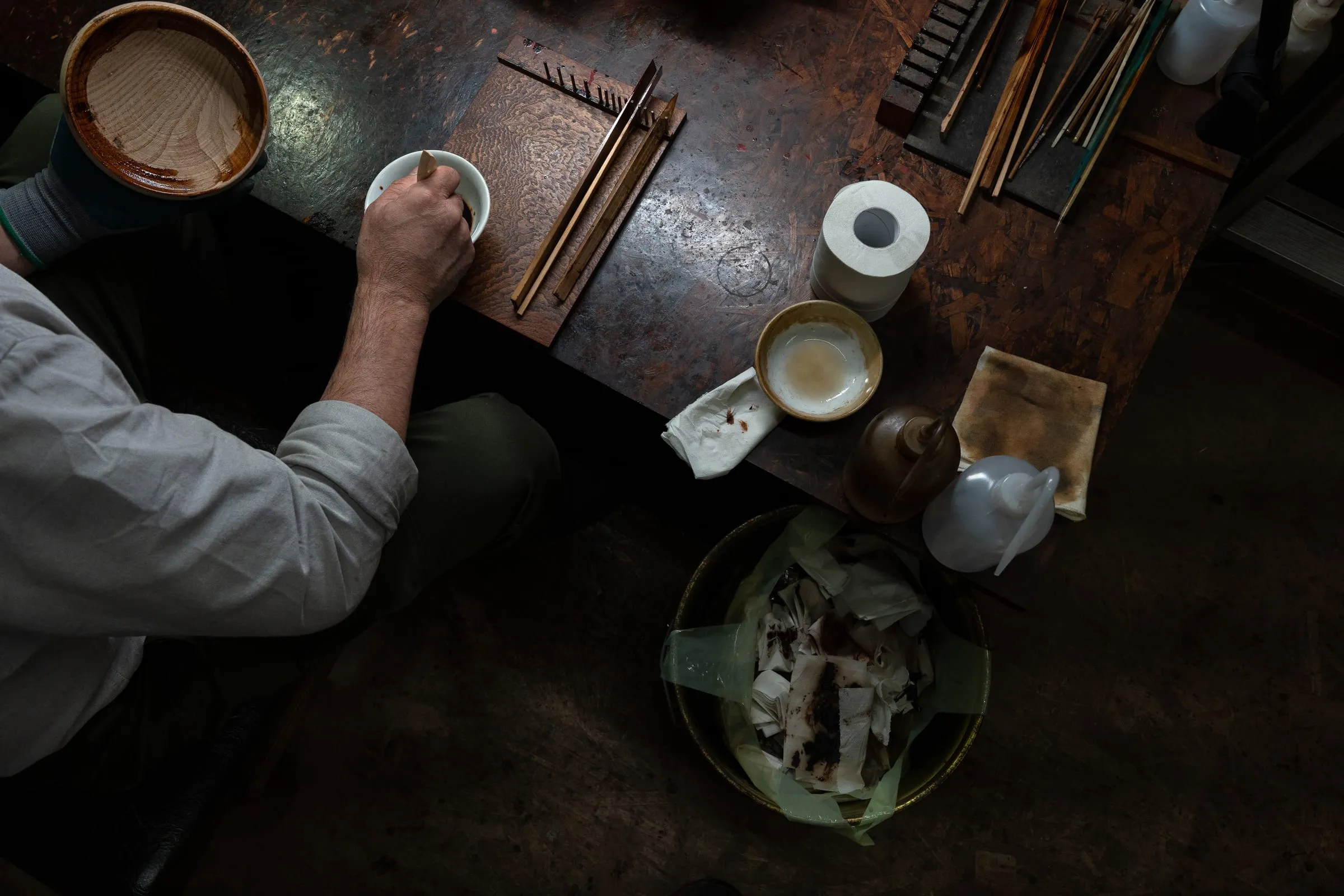
Tsuji Tohru, 61, works on a wooden lacquerware piece in his workshop in Daigo, Ibaraki Prefecture, Japan. He carries out the full cycle of urushi work — from growing lacquer trees and collecting the sap to refining it and applying it to wooden objects for sale. Machines assist in the refining stage, but traditional tools are still used, and most of the process is done by hand to avoid stressing the sap. Tsuji runs a renowned shop in Daigo, where he sells handcrafted wooden bowls and cups finished with natural urushi lacquer.
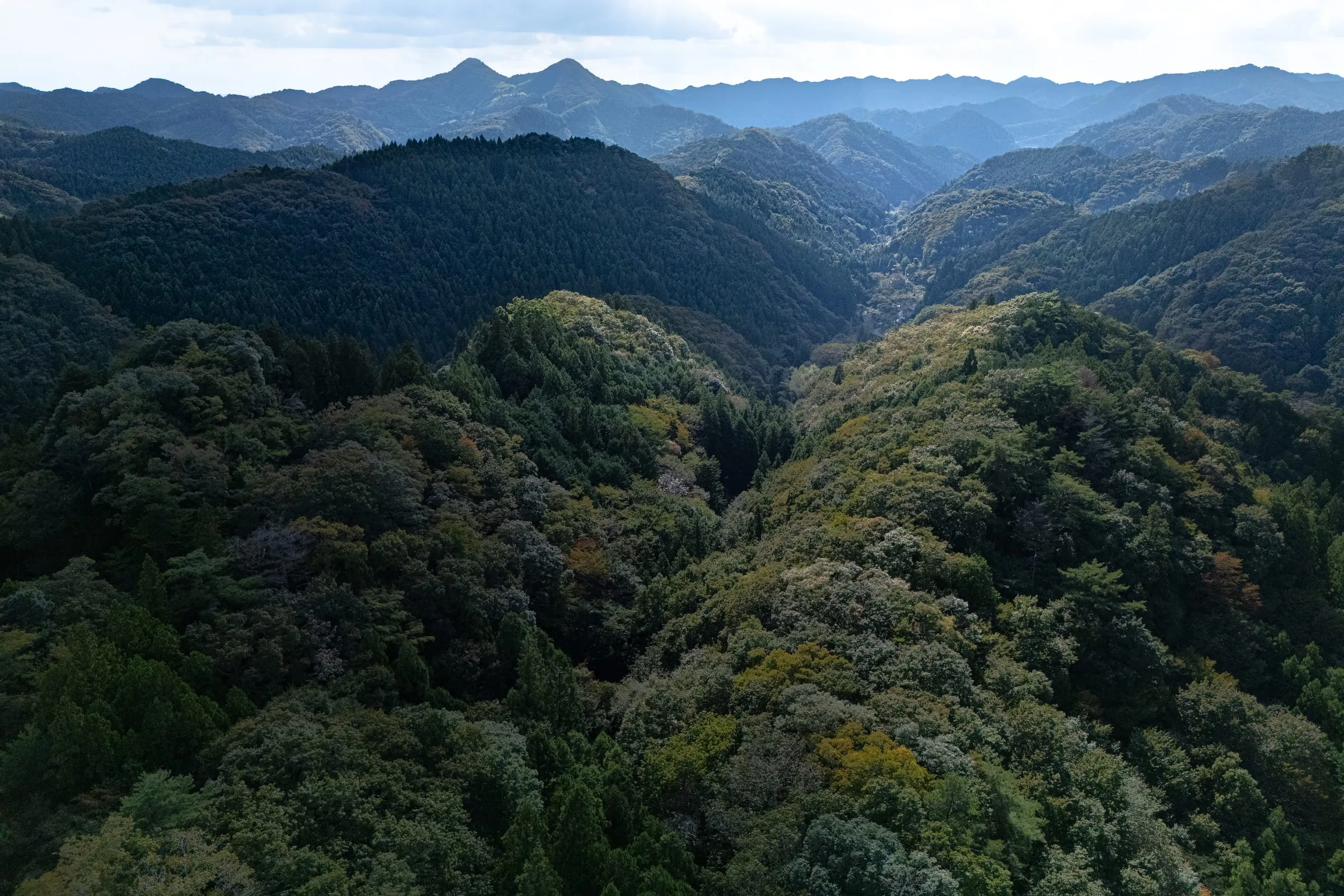
Lacquer trees have been cultivated in the Daigo region since the 17t century, and the area has long been known for producing high-quality lacquer. At its peak, more than 150 specialist harvesters worked here, but only a few remain today. In 2015, Japan’s Agency for Cultural Affairs mandated the use of domestic lacquer for restoring national treasures, increasing the importance of Daigo’s production.
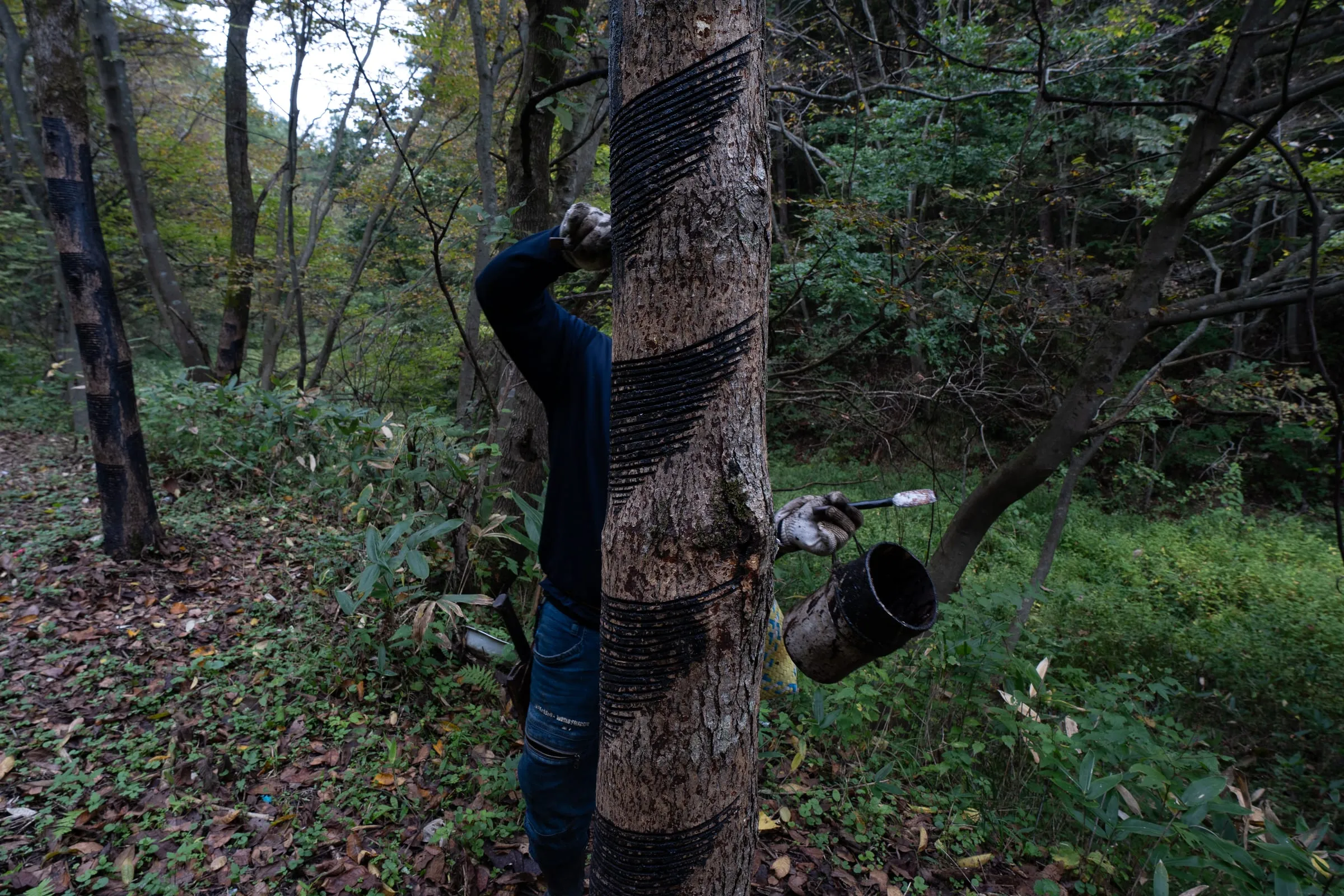
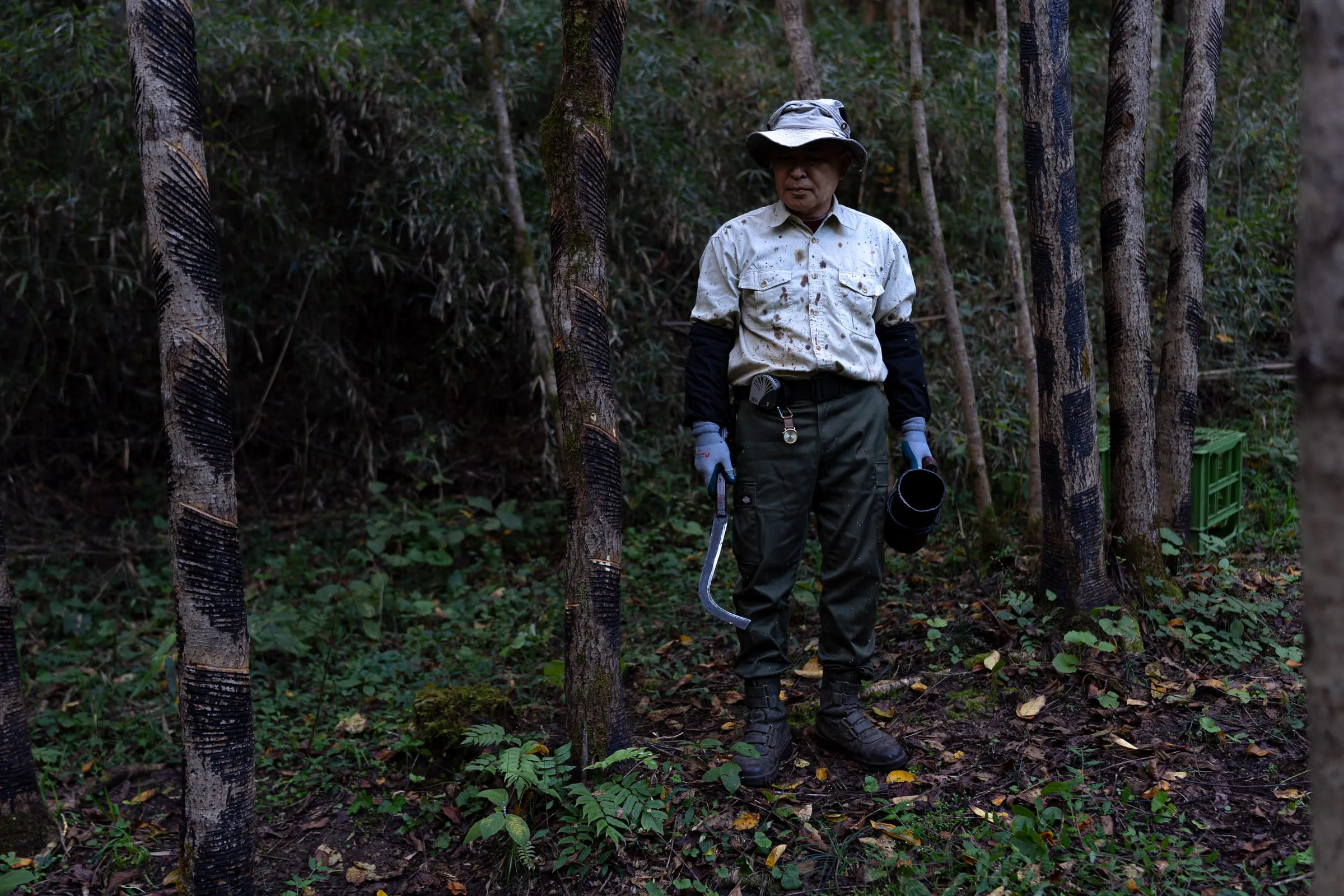
Tsuji, 61, ventures into the forests of Daigo, Ibaraki Prefecture, to collect lacquer sap. Although production in Japan has sharply declined, domestic urushi is still regarded as the highest-quality lacquer in the world for its clarity and durability. Tsuji continues the centuries-old tradition of sap harvesting, working by hand with tools passed down through generations.
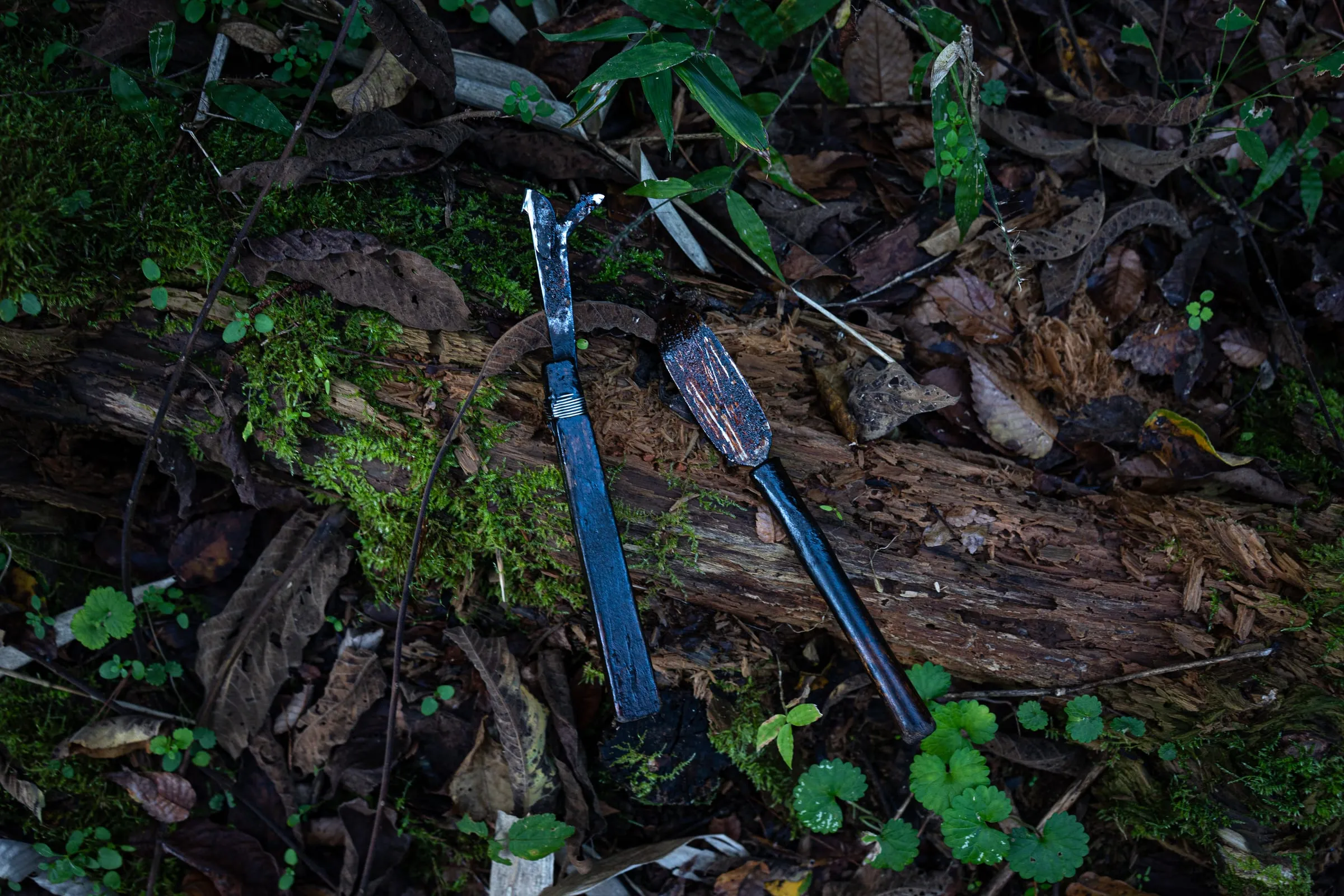
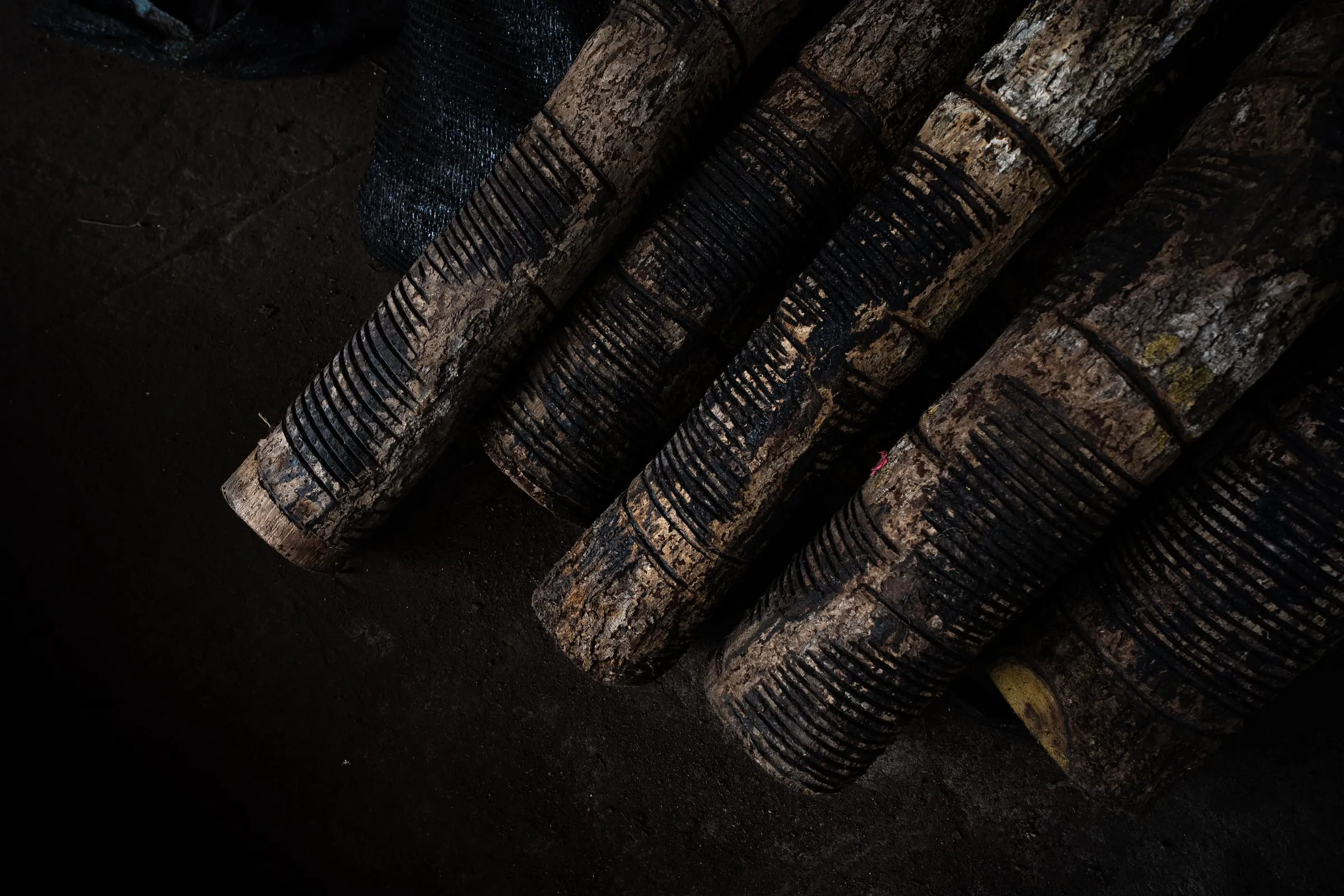
Traditional tools used for urushi tapping. The urushi kanna (left) is used to make precise, slanted cuts in the bark to release the sap. The hera (right), a spatula-like tool, is used to collect the dripping sap into a container.
Chiba Hirotaka, 40, collects lacquer sap in the forests of Joboji, Iwate Prefecture, Japan. During urushi tapping, artisans make small cuts in the tree’s bark to let the sap flow, collecting it drop by drop. Each cut yields about one gram of sap, and during the high season, some artisans gather more than two kilograms a day, working from early morning until evening.
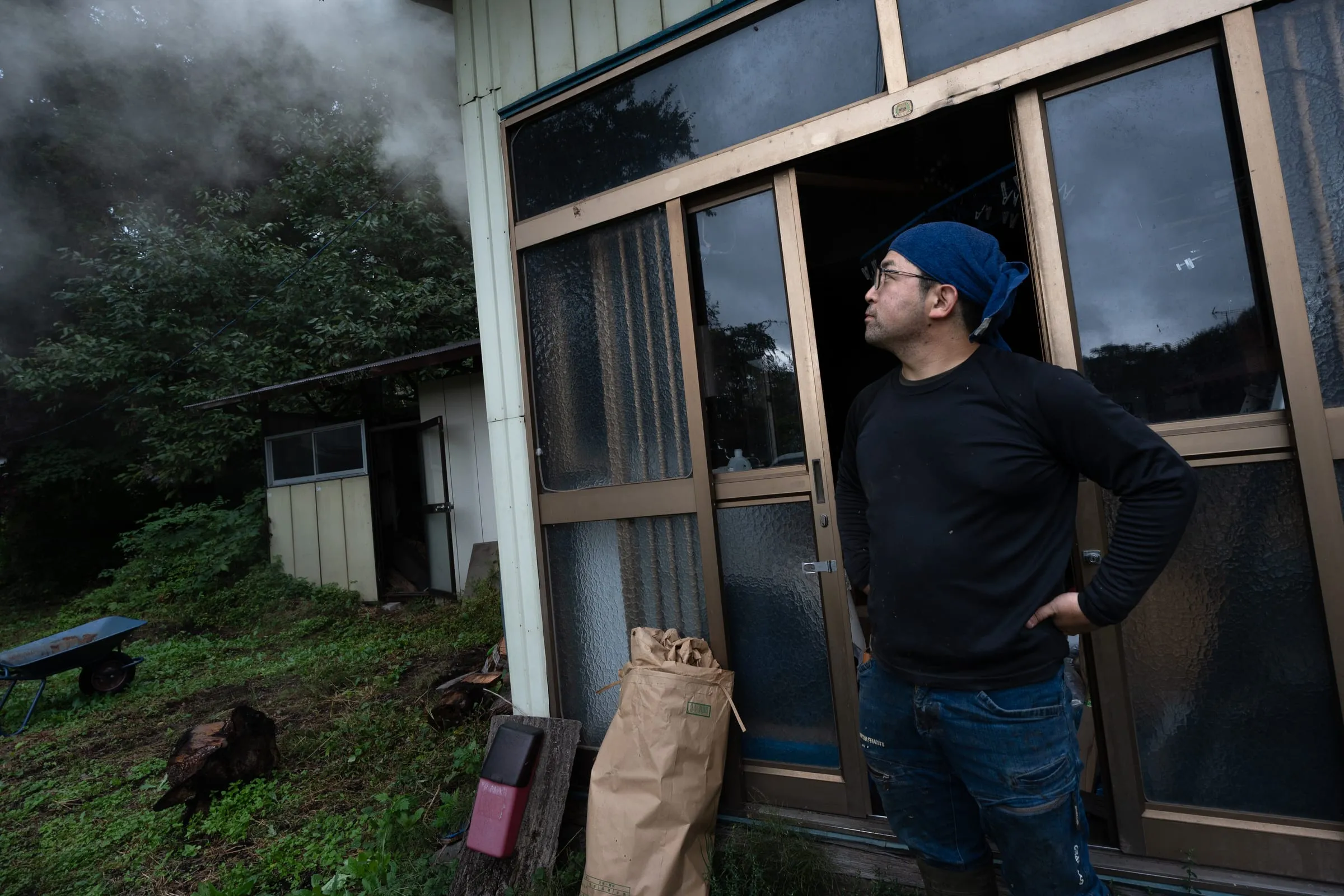
Chiba, 40, lives alone in a small house near the forests of Joboji. His parents live in Hokkaido, and he visits them about once a year. He enjoys his work and spends his free time making wooden crafts.
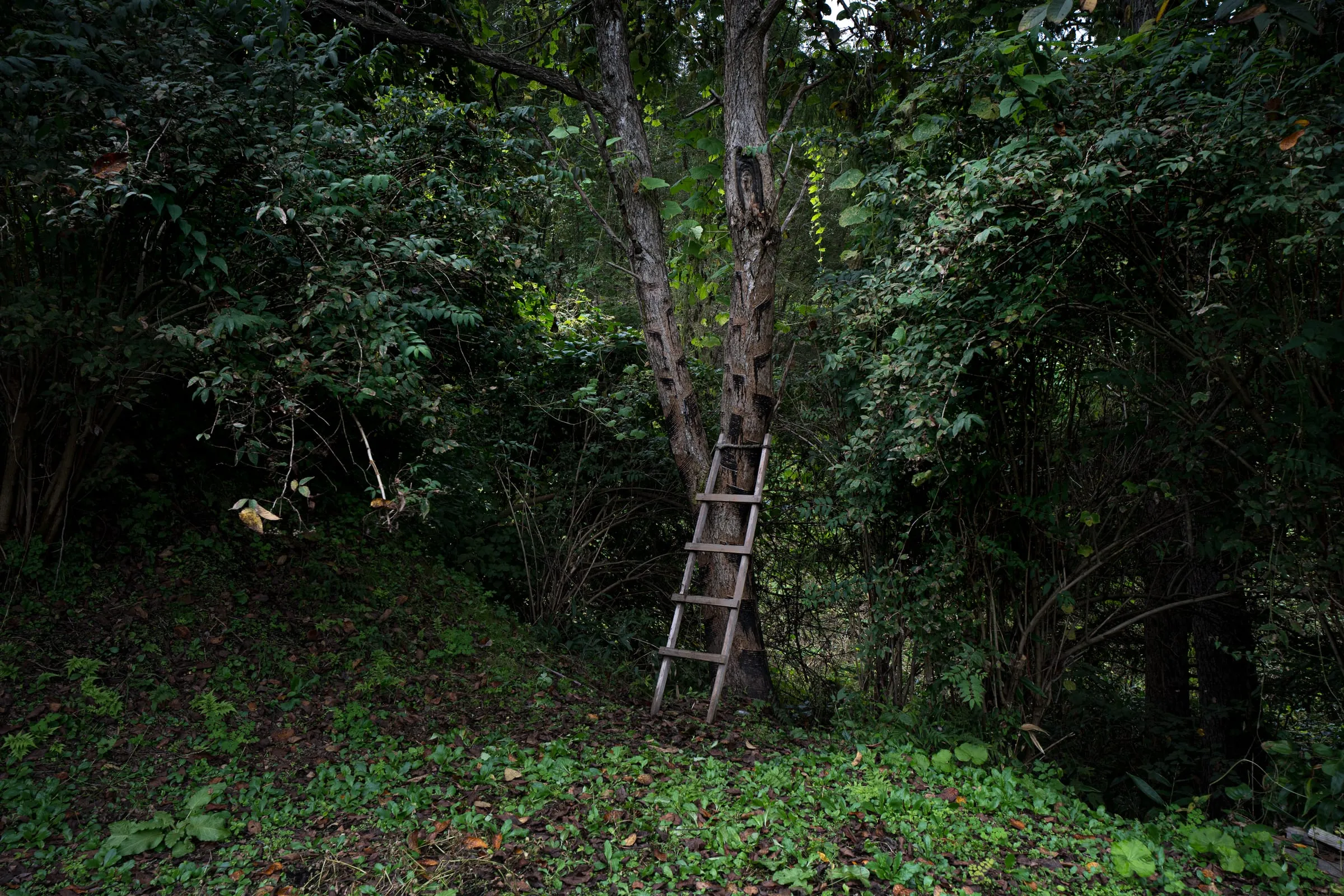
Lacquer trees in the Daigo and Joboji regions are cultivated for 10 to 20 years before being tapped for their sap. After about six months of tapping, the tree is usually cut down, yielding only about 180 to 200 grams of sap over its lifetime—a key reason for the material’s rarity.
Urushi, photograph 9
Japan’s lacquer tradition faces an urgent need for conservation. Each urushi tree takes about ten years to grow and produces only a small cup of sap in its lifetime. The work is slow, demanding, and low-yield, and with an aging generation of artisans, the future of this craft is increasingly at risk.
Next projectSiguiente proyectoDIAMONDSDIAMANTES →
1 / 10