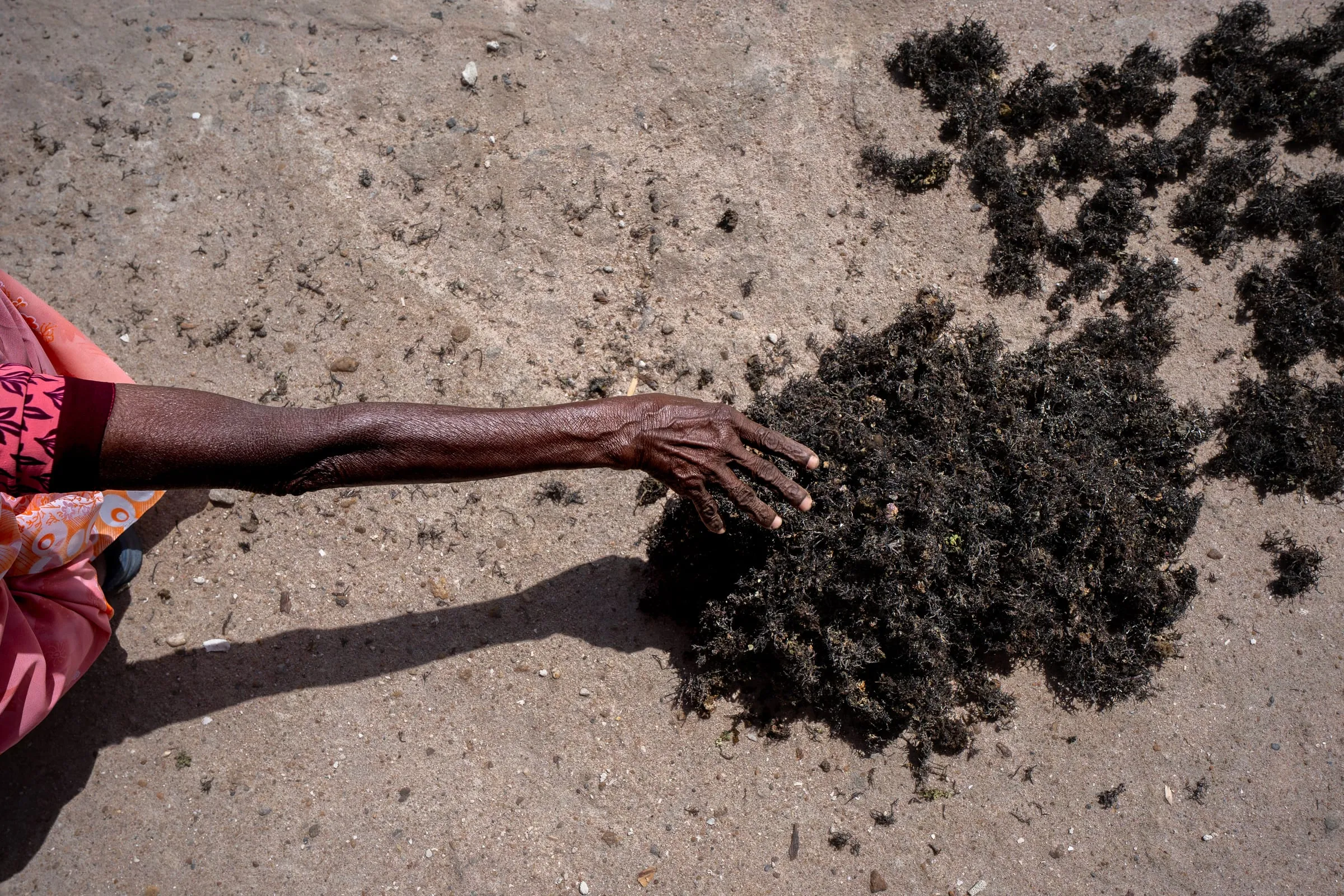
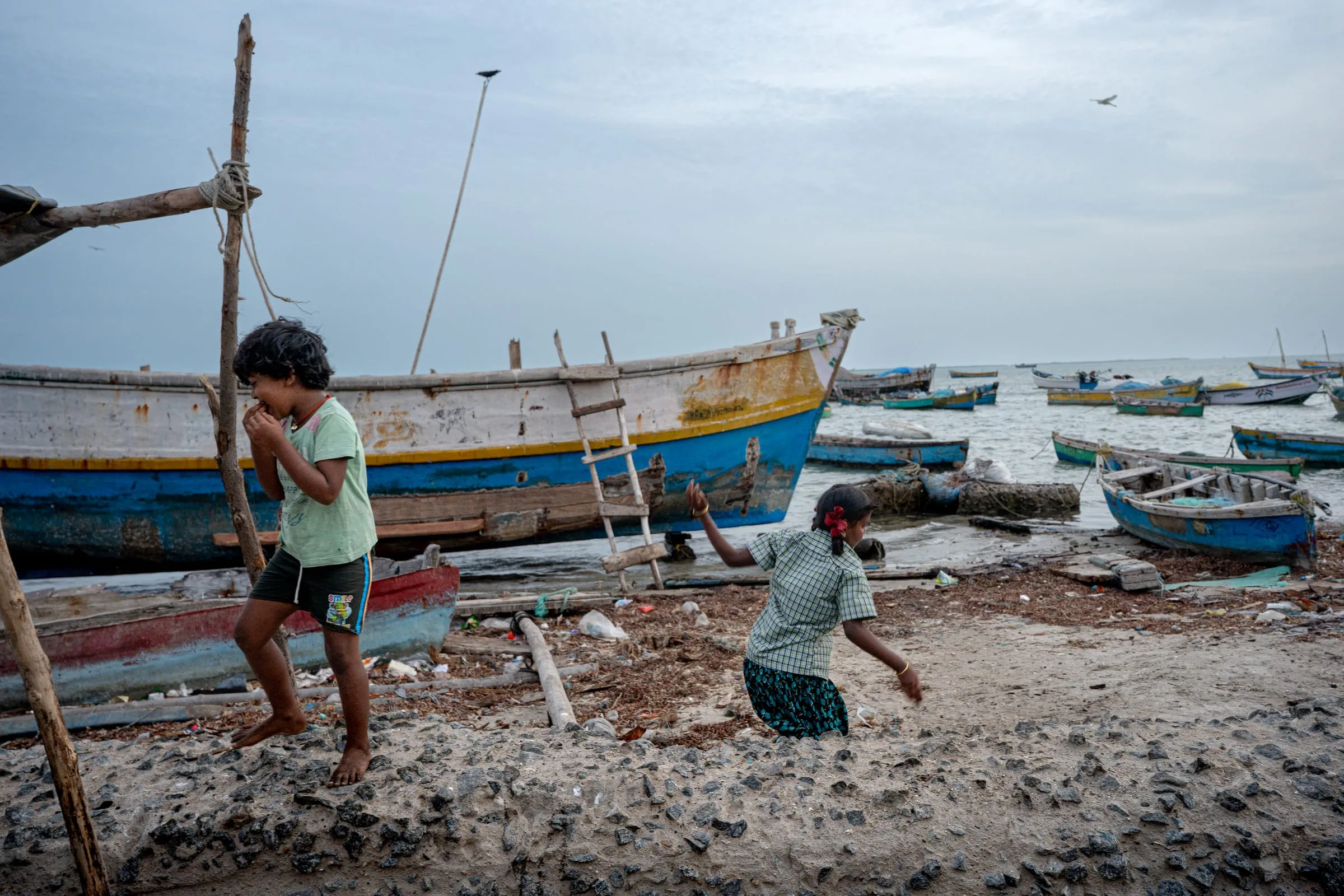
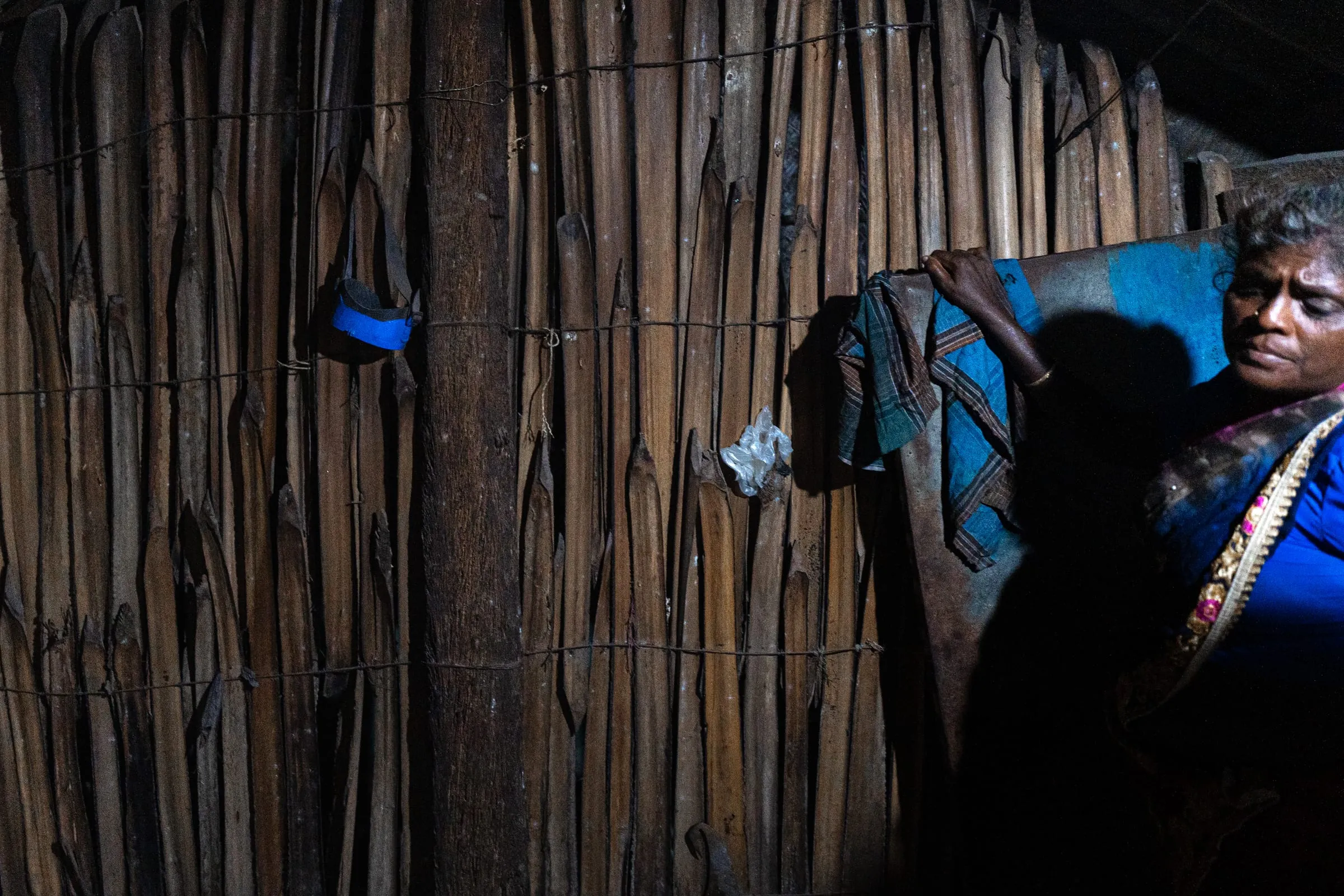
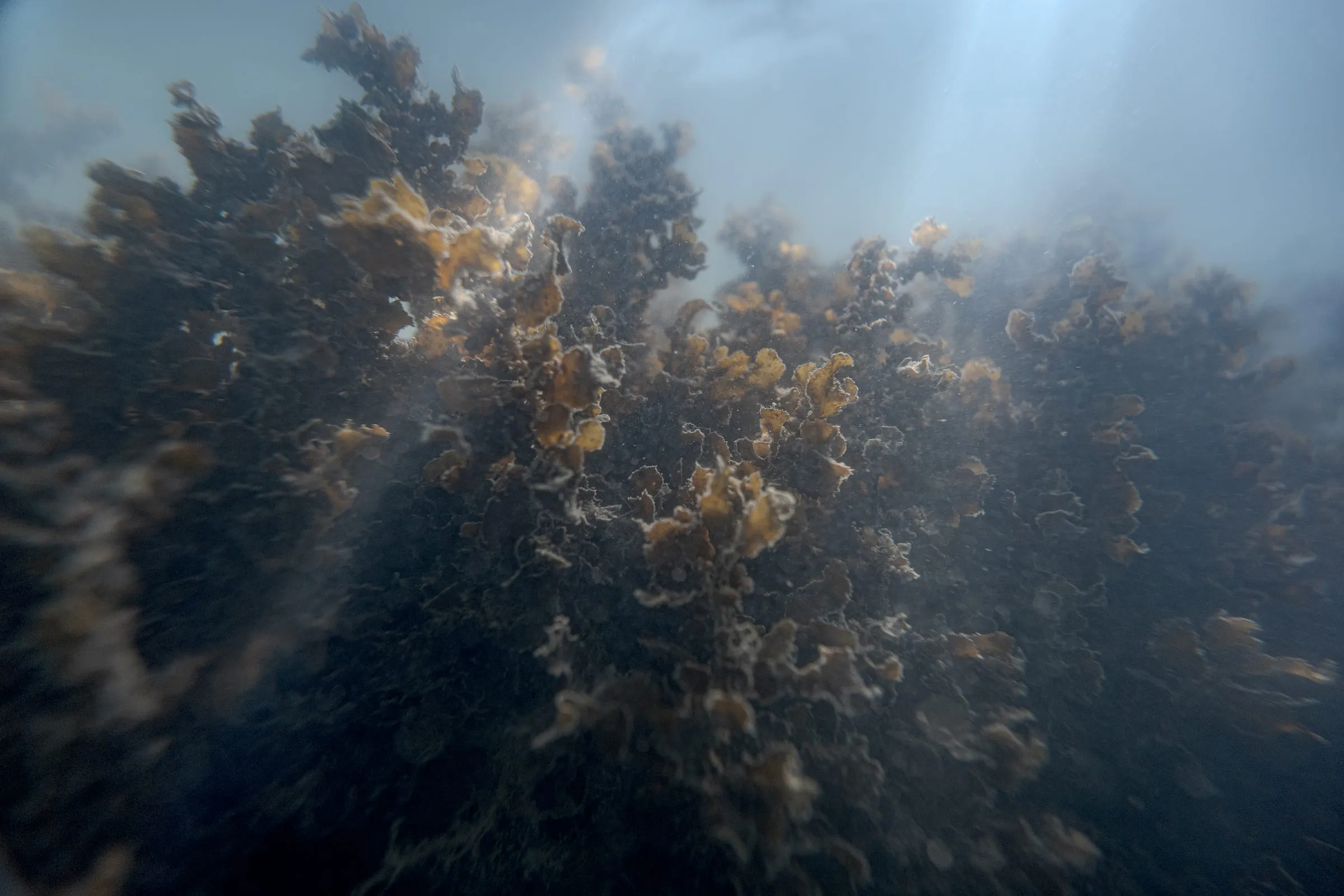
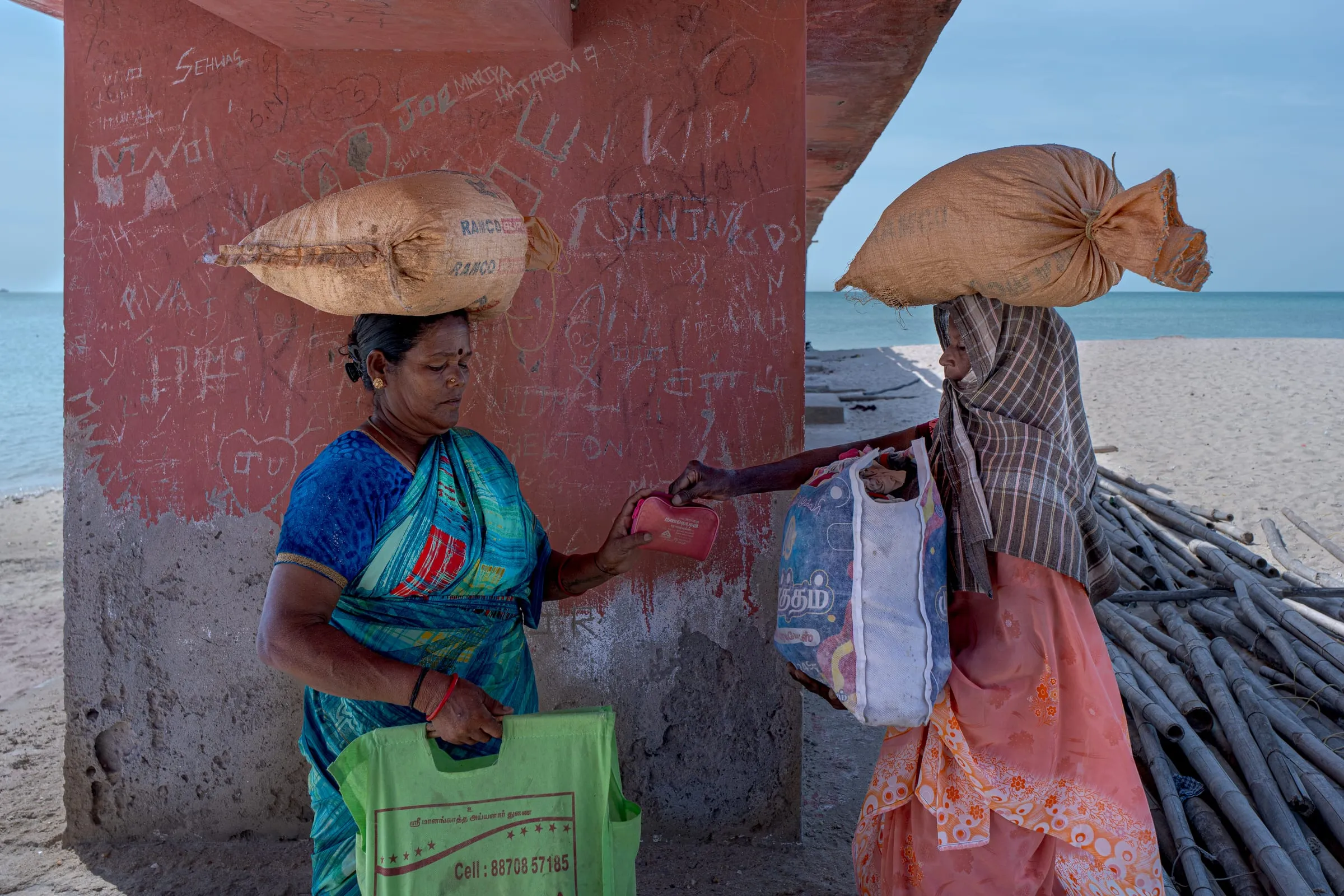
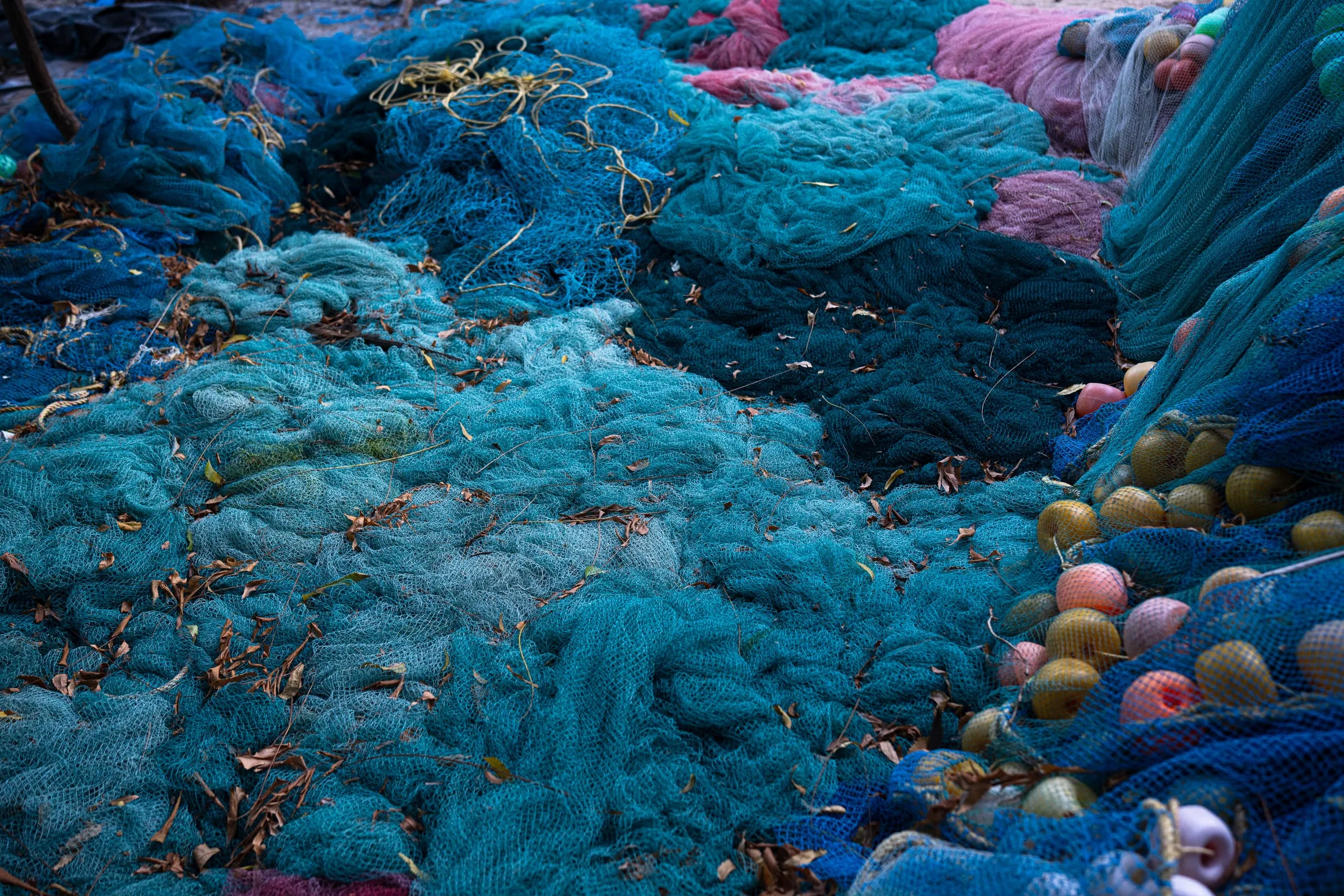
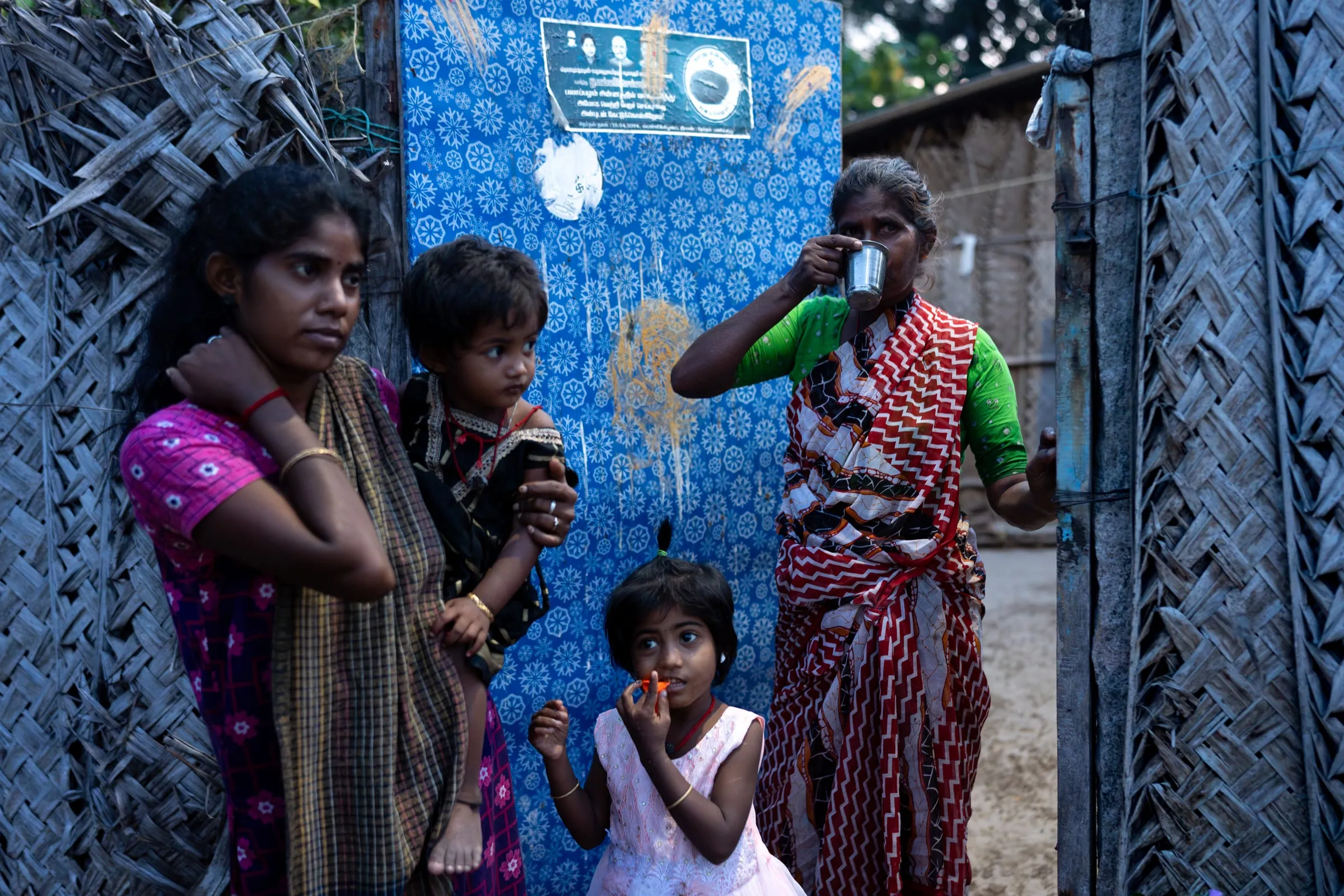
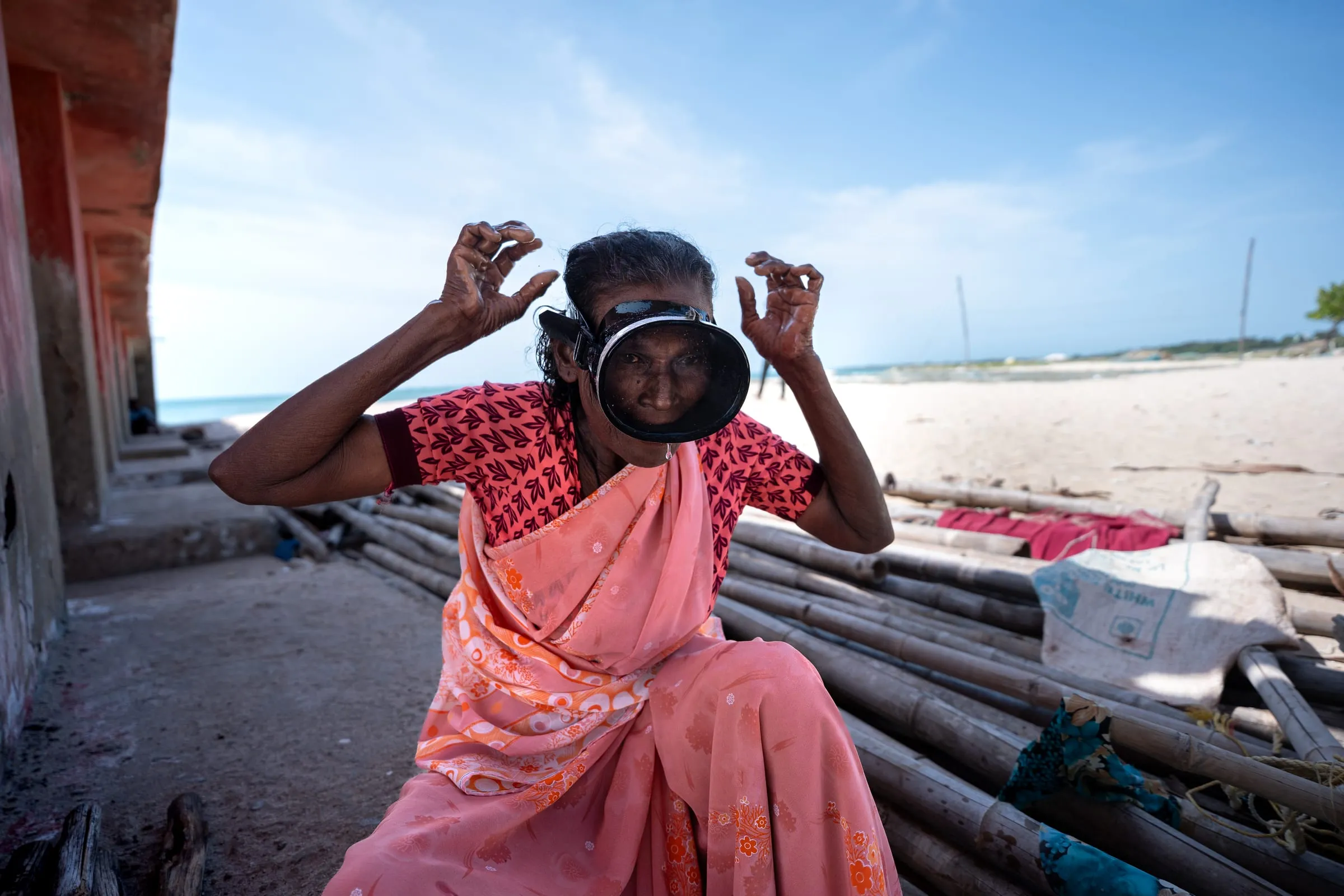
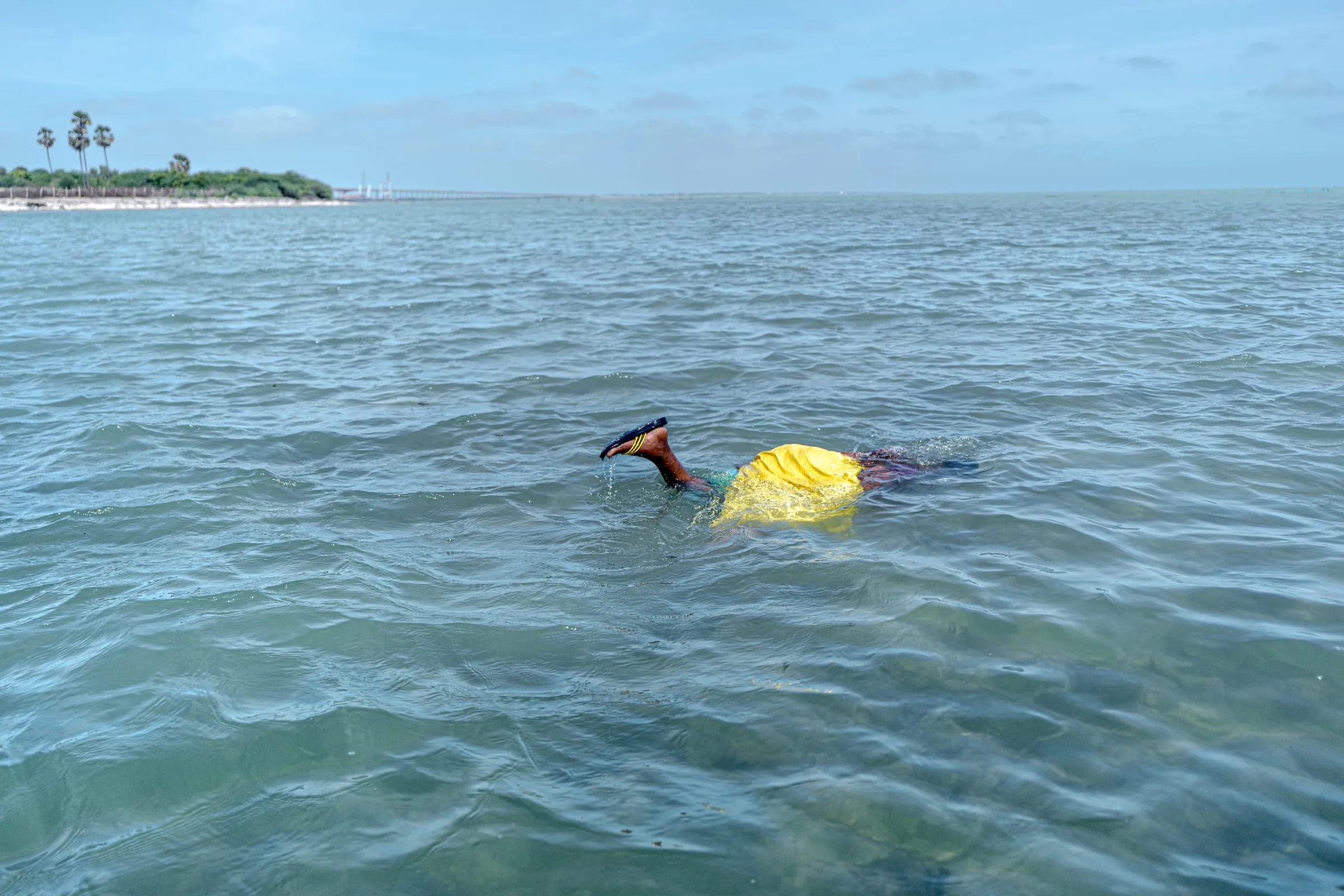
Mary, 57, organizes the collection of freshly harvested seaweed near the shores of Rameswaram Island, Tamil Nadu. Seaweed farming has been a lifeline for women here since their teenage years. A kilo of wet seaweed sells for around 50 rupees (about 0.6 USD), providing modest but vital income for coastal families who rely on the sea for survival.Children play along the beach in Chinnapalam village, Rameswaram. Fishing has long been the island’s main occupation, historically dominated by men. In recent decades, seaweed farming has opened new economic opportunities for women, helping diversify household incomes in these coastal communities.Diving gear hangs on the wall of Bagvati’s kitchen in a coastal village near Rameswaram. She began seaweed harvesting at 25, after years as a homemaker. Like many women divers, she uses simple, often second-hand equipment—masks and sacks tied to their waists—to collect seaweed from shallow waters.Seaweed collected along Tamil Nadu’s coast is processed into products used in food, cosmetics, fertilizers, and pharmaceuticals. It contains carrageenan, a natural thickening agent widely used by industry. Scientists say seaweed can help capture carbon and support marine ecosystems, yet rising sea temperatures are lowering its quality and threatening yields across India’s southern waters.Mary, 57, and Bagvati, 52, finalize a seaweed collection at the shore in Villondi. Most women hand over their harvest to male middlemen who set prices and control sales. Few know the true market value or final buyers of their product. Even basic gear and supplies are purchased through men in their households or local harbor shops.Mary’s husband, Rajendran, stacks fishing nets on the terrace of their home in Rameswaram, a town where most men work in the fishing industry. While fishing remains the main livelihood for men, many women in the community have turned to seaweed harvesting to supplement household income.Mary lives with her husband and has no children, but her sister’s family lives next door. Her niece recently gave birth, and Mary encourages her to pursue education instead of seaweed diving — a job often marked by risk, low pay, and social stigma despite its crucial role in supporting coastal livelihoods.Mary, 57, poses with her diving mask outside her home in Rameswaram, on Pamban Island. Like hundreds of women divers, she works for hours underwater wearing a saree and using only basic gear. Protection is minimal, and sharp coral and rocks make each dive dangerous. The nearest medical facility is eight kilometers away, across the Pamban Bridge, leaving divers with little access to healthcare.Bagvati, 42, dives off the coast of Rameswaram in search of seaweed. Tamil Nadu’s government plans to expand the industry through an Integrated Seaweed Park in Ramanathapuram District, focusing on sustainable cultivation, processing, and research. Despite these ambitions plans, local women divers continue to face uncertain incomes and physical dangers beneath the surface.Next projectSiguiente proyectoSALTSAL →