Skip to content
EduCifuentes
    • PELILLO
    • URUSHI
    • DIAMONDSDIAMANTES
    • SEAWEEDALGAS
    • SALTSAL
  • About/ContactSobre mí/Contacto
/

SaltSal

Gujarat and Tamil Nadu, India, 2024Gujarat y Tamil Nadu, India, 2024

As the monsoon ends, many families leave their villages and migrate to the salt pans. There they set up camps and live in harsh conditions to practice one of the world’s oldest trades: salt production. For eight months, children are out of school and families survive with limited access to drinking water, electricity, and healthcare.

Workdays take place under extreme temperatures, and because they lack proper protection, many salt workers suffer burns and chronic skin conditions. Added to this is the increase in unexpected rains and cyclones that threaten production and make the work even riskier.

India is the world’s third-largest producer of salt, an industry expanding in response to rising global demand for refined salt. However, the communities that make it possible remain invisible: absent from public policy, with little recognition and almost no social protection.

Cuando termina el monzón, muchas familias dejan sus aldeas y migran a las salinas. Allí levantan campamentos y viven en condiciones muy duras para practicar uno de los oficios más antiguos del mundo: la producción de sal. Durante ocho meses, los niños no van a la escuela y las familias sobreviven con acceso limitado a agua potable, electricidad y atención de salud.

Las jornadas de trabajo transcurren bajo temperaturas extremas y, por falta de protección adecuada, muchos trabajadores de la sal sufren quemaduras y enfermedades crónicas de la piel. A esto se suma el aumento de lluvias inesperadas y ciclones, que amenazan la producción y vuelven el trabajo aún más riesgoso.

India es el tercer productor de sal del mundo, una industria que crece en respuesta a la creciente demanda global de sal refinada. Sin embargo, las comunidades que la hacen posible siguen siendo invisibles: ausentes de las políticas públicas, con escaso reconocimiento y casi sin protección social.
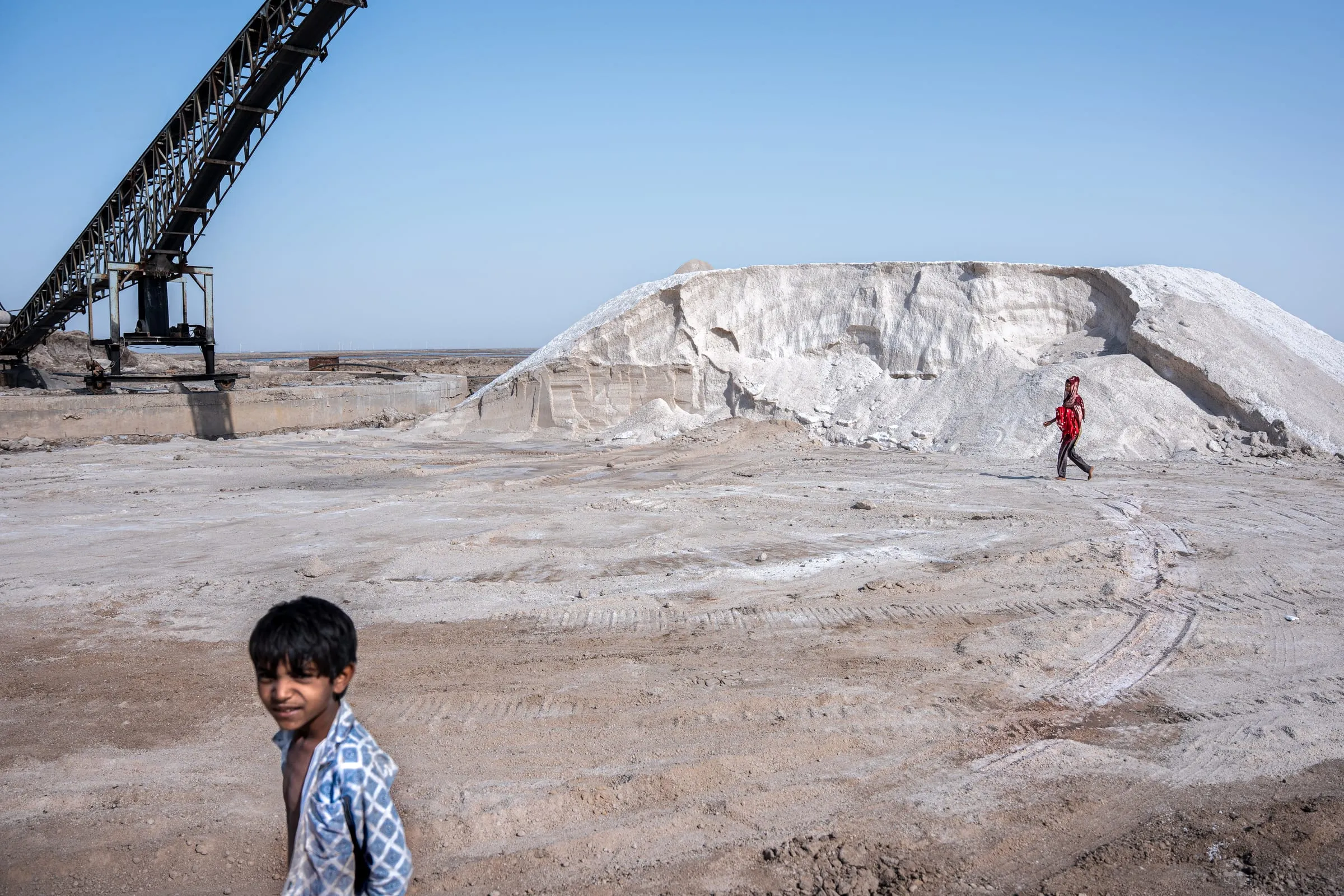
Members of the Agariya community harvest salt in the salt pans of Maliya, within the Little Rann of Kutch, Gujarat, India. Also known as Koli Agariyas, they are traditional salt farmers who migrate seasonally to the Rann, living and working in harsh desert conditions for six to eight months each year. Salt production in this region is believed to date back thousands of years.
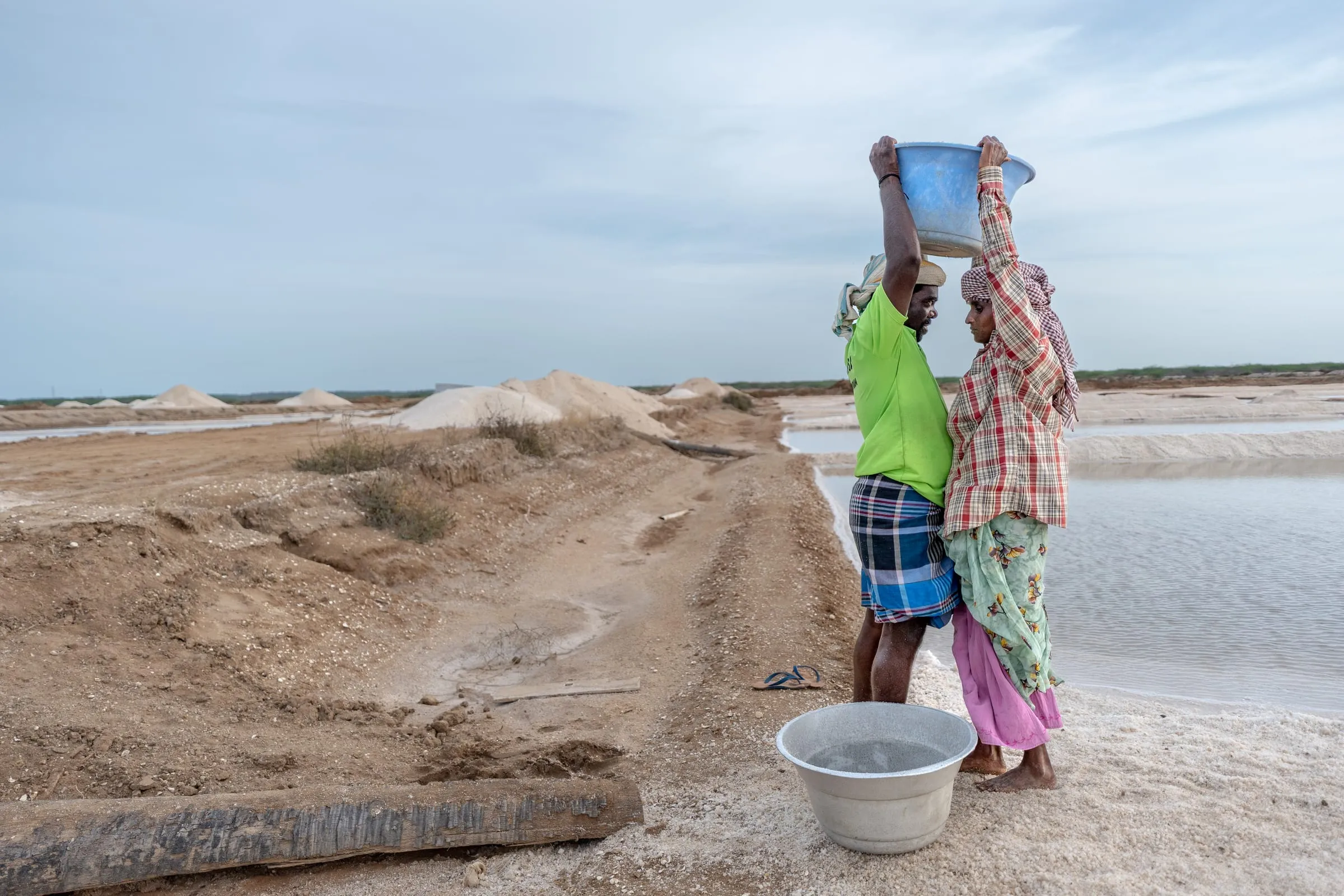
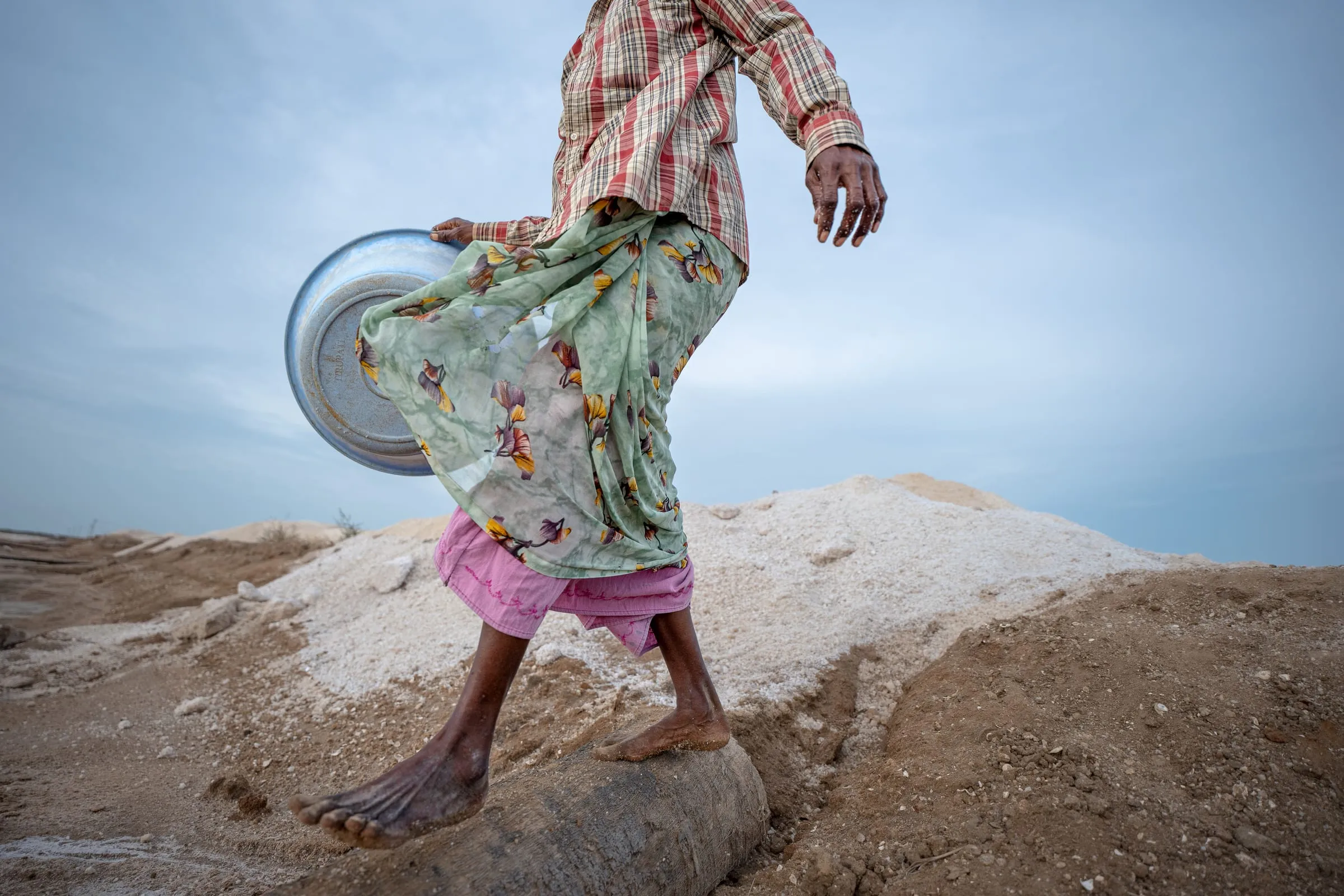
A woman carries salt in an aluminum satti (bowl) in Tamil Nadu, India. Women make up as much as 40% of the salt pan labor force, typically engaged in scraping, carrying, and drying salt. Loads can weigh up to 25 kilograms.
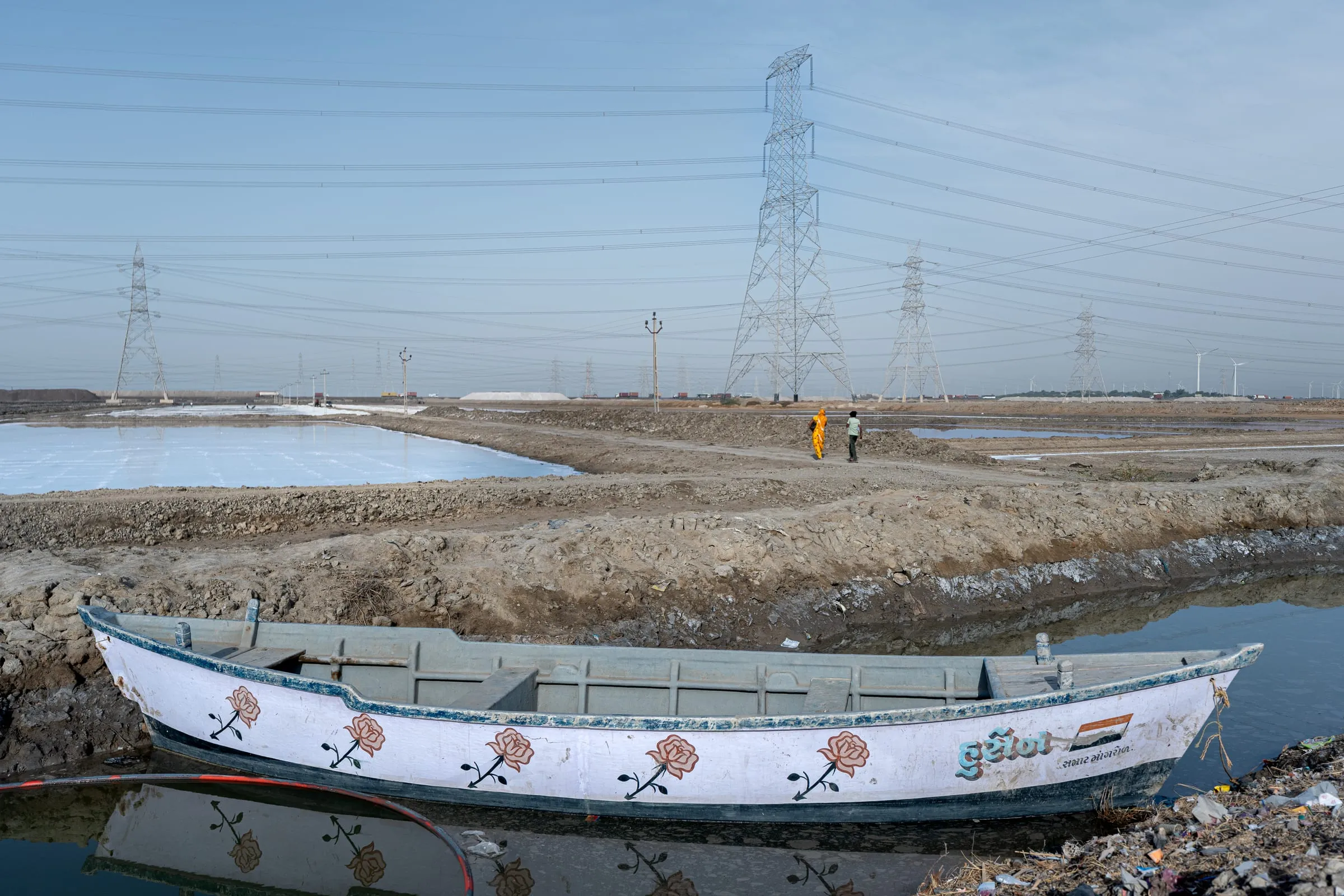
Traditional salt makers in Maliya, Gujarat, India, are being displaced by large-scale industrial salt producers. These operations use machinery to extract salt more efficiently and construct permanent bunds that disrupt local ecosystems. The altered water flow threatens the survival of ginger prawns, impacting a seasonal livelihood practiced during the monsoon.
Thoothukudi, in southeastern Tamil Nadu, is among the hottest districts in South India. During the salt harvest season, temperatures often rise above 43°C, with high humidity adding to the heat stress. Salt pan workers are exposed to both direct sunlight and intense reflected heat from the salt crystals, often without shade or protective gear.
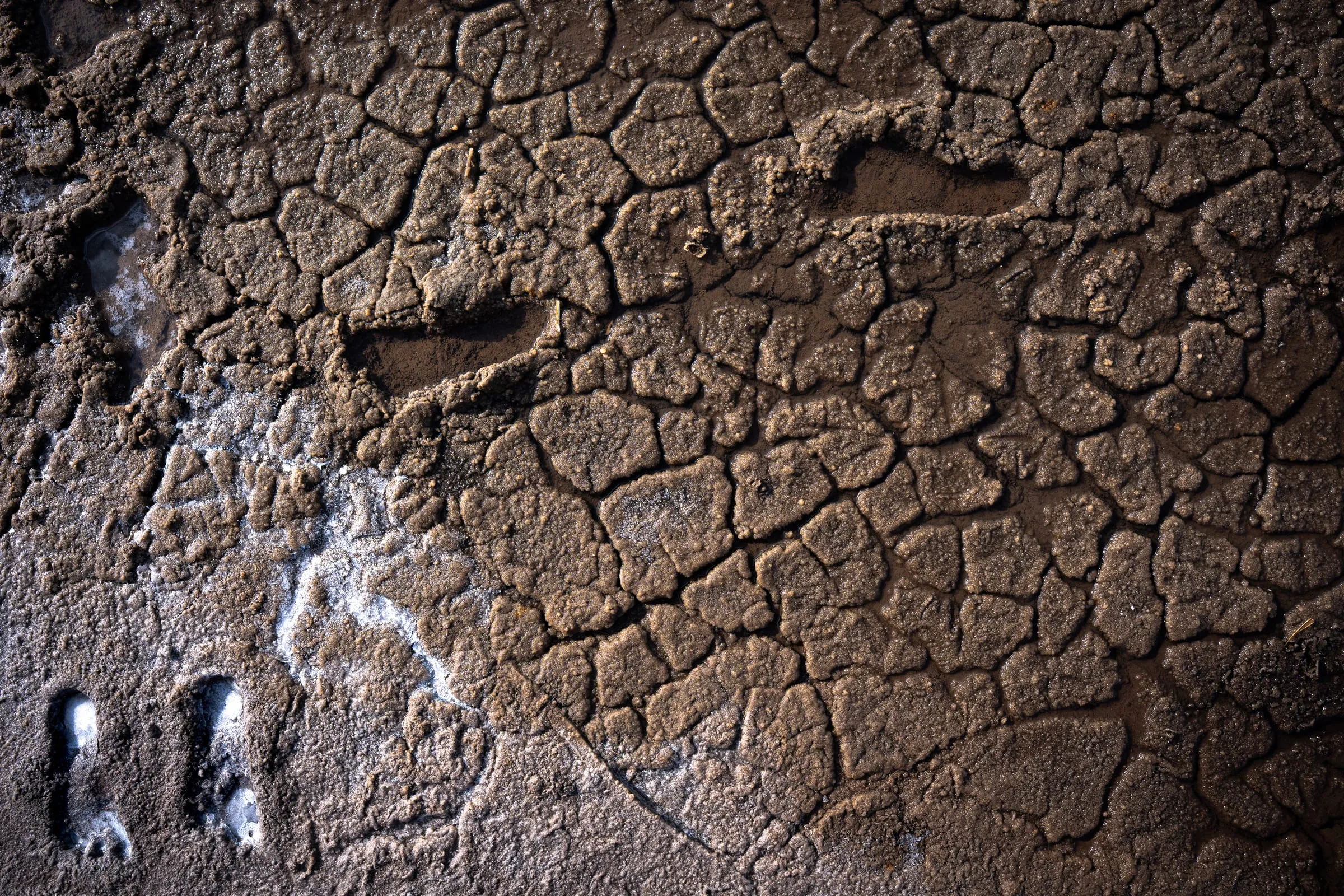
Footprints along the edge of a salt pool in Maliya, Gujarat, India. Rising temperatures have made evaporation cycles increasingly unpredictable, affecting salt production and endangering the safety of workers exposed to extreme heat. The timing and intensity of the monsoon are critical to the salt-making calendar, as unseasonal rains can flood the pans and destroy entire harvests, often forcing workers to halt or delay operations.
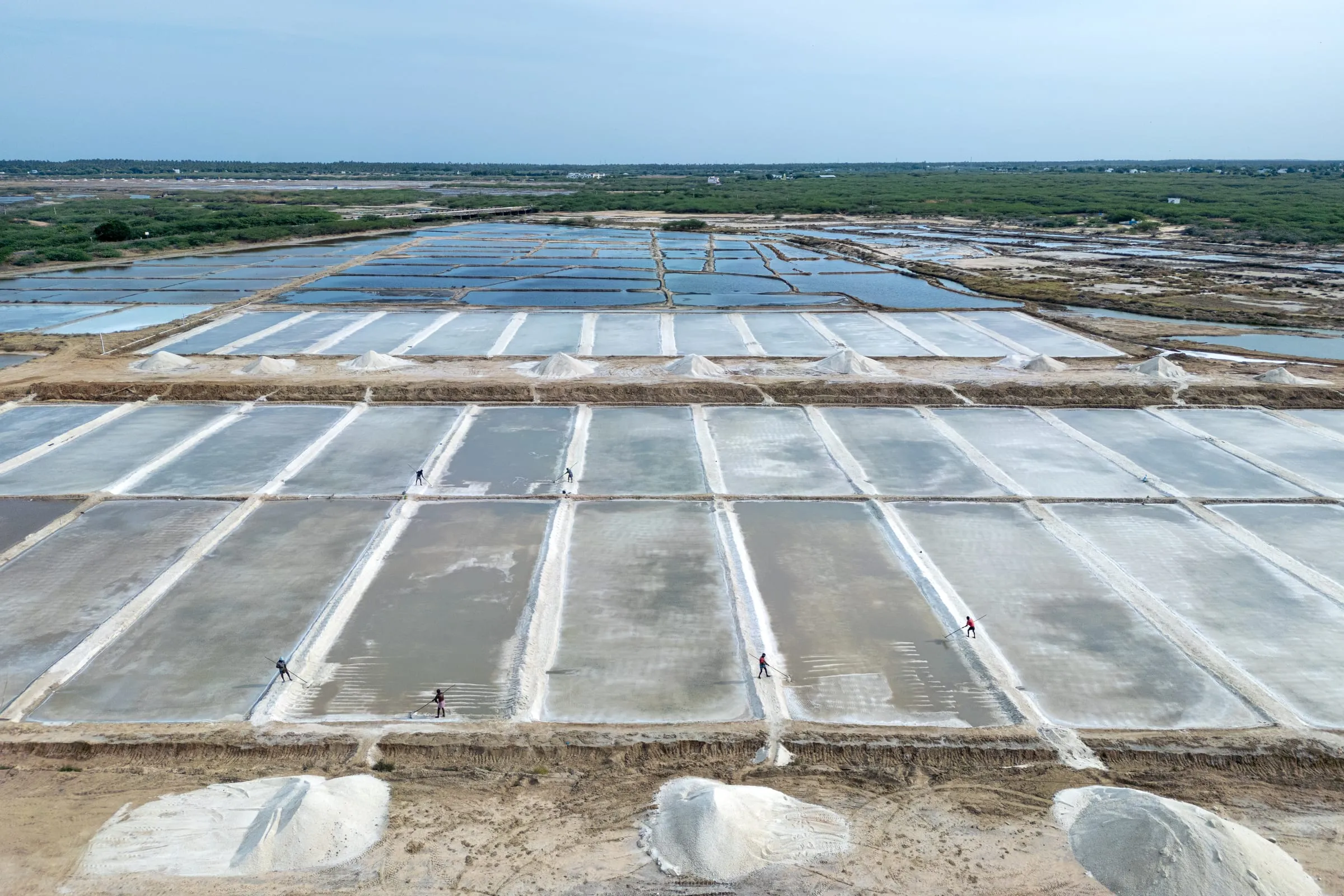
An aerial view of a salt pan in Thiruppullani, Tamil Nadu, India. The pans are divided into evaporation tanks (aan pathis) and crystallization pans (penn pathis), where water gradually evaporates under the intense sun, leaving behind salt crystals. Covering approximately 20 acres, the salt pan continues to rely heavily on manual labor.
Women and men perform the same tasks in the salt pans of Thiruppullani, Tamil Nadu, India, yet women are often paid less per day. Wages are seasonal, typically ranging from 250 to 350 rupees (approximately USD 3–4.50), depending on the type of work. Most workers are employed without formal contracts.
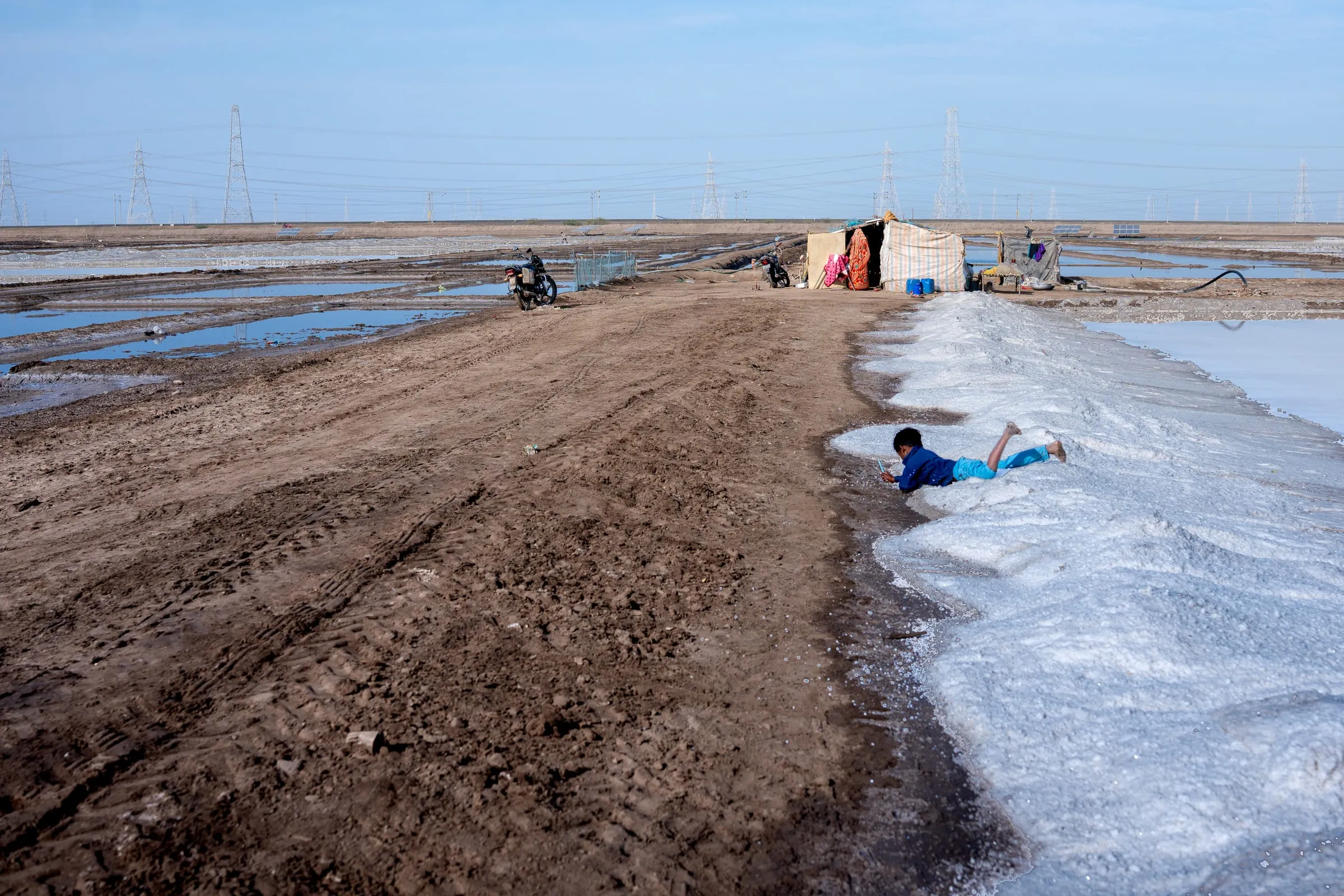
A child plays near the salt pools in Maliya, Gujarat, India. Salt workers migrate each year with their families to the salt pans during the harvest season, typically from October to March. Children from salt-working families often miss school due to this seasonal migration.
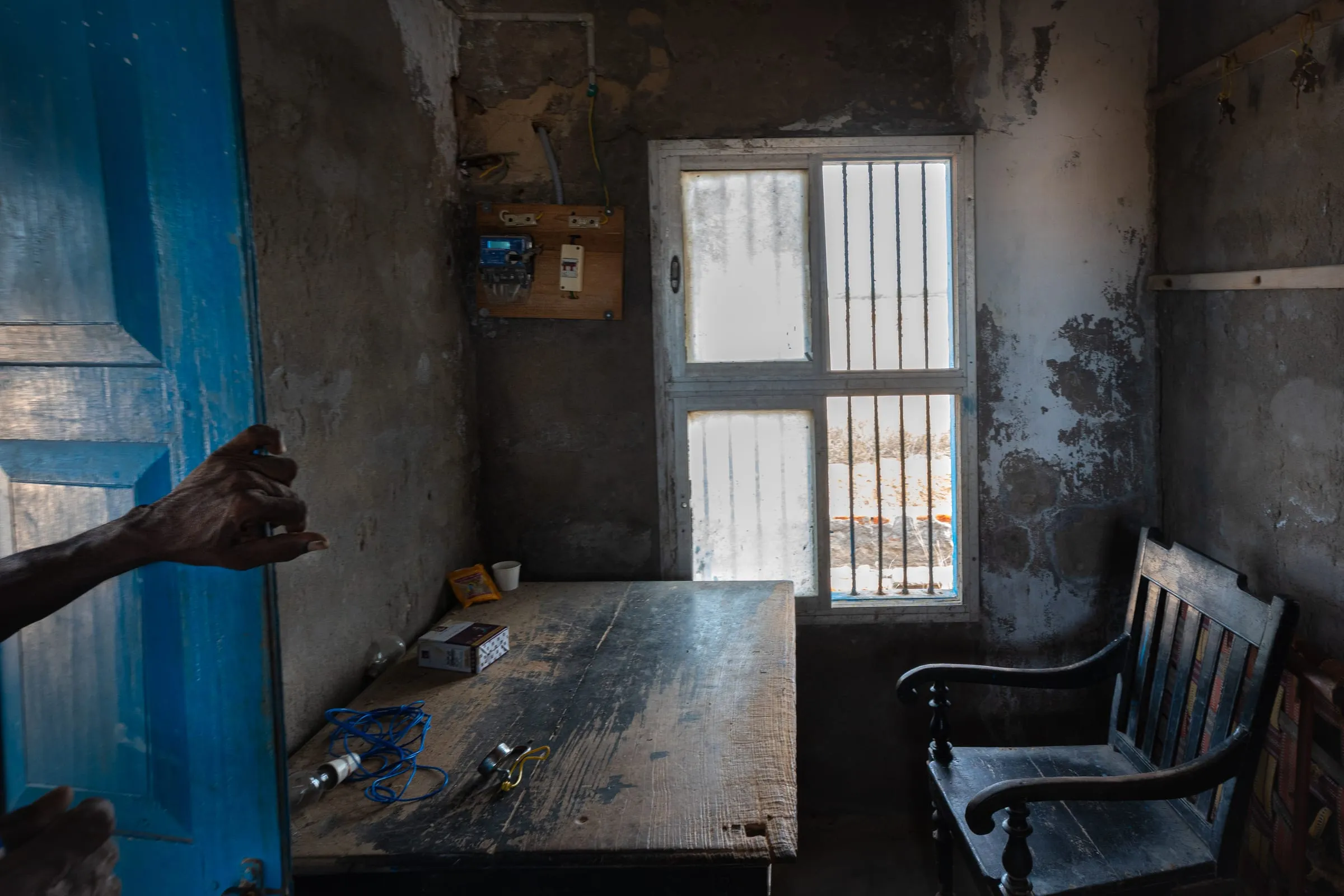
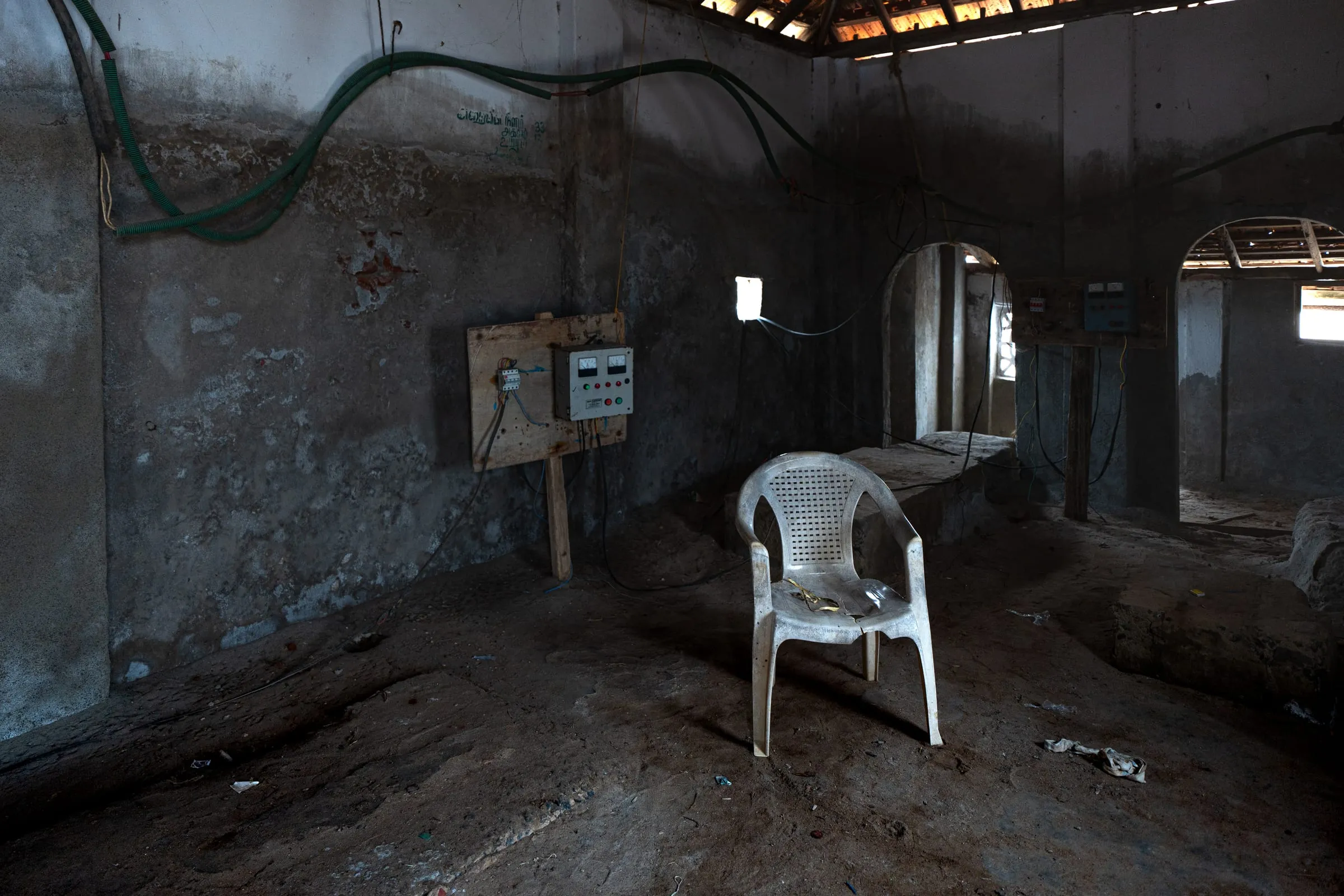
An office complex at a salt pan in Thiruppullani, Tamil Nadu, India. The administrative area is used to maintain labor records and inventory logs. It also serves as a space where workers meet officials, collect wages, and address attendance or contractor-related matters.
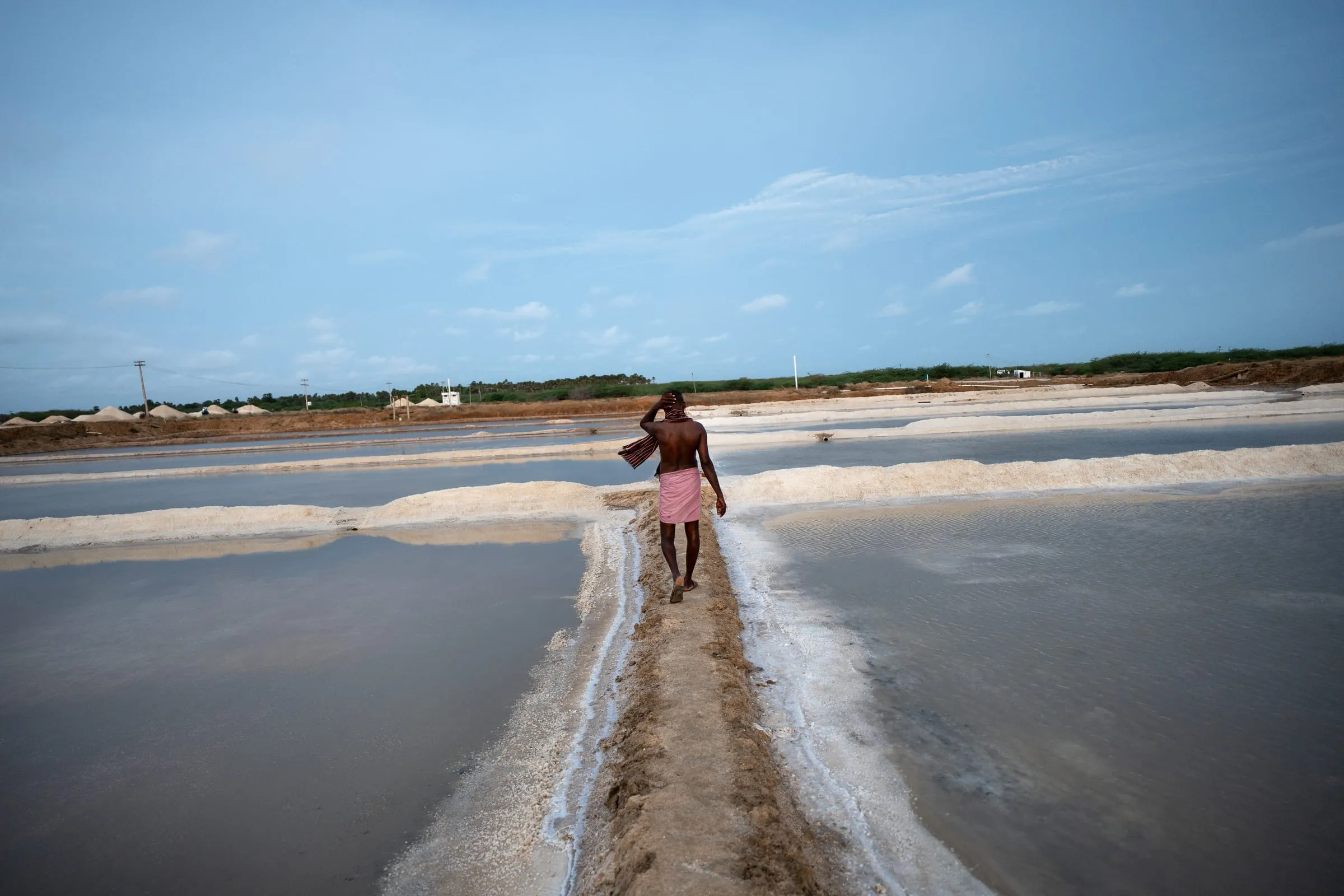
Murugavel, 45, finishes his shift at the salt pans in Thiruppullani, Tamil Nadu, India. Shifts typically begin at 6:00 a.m. and end around 3:00 p.m., with workers exposed to extreme heat and little to no shade. Murugavel has been working in the salt pans for 27 years. He lives in Valinokkam village, about an hour away by rickshaw.
Next projectSiguiente proyectoPELILLO →
1 / 10